Материал: Бауманн У., Перре М. - Клиническая психология

Johnson, J. H. (1986).
Life events as stressors in childhood and adolescence.
Newbury Park: Sage.
Kaiser, S. & Scherer, K. R. (in press). Models of «normal» emotions applied to facial and vocal
expression in clinical disorders. In W. F. Flack & J. D. Lavid (Eds.),
Emotions in Psychopathology.
New York:
Oxford Press.
Kanner, A. D., Coyne, J. C, Schaefer, C. & Lazarus, R. S. (1981). Comparison of two modes of stress
measurement: Daily hasseis and uplifts versus major life events.
Journal of Behavioral Medicine, 4,
1-39.
Katschnig, H. (Hrsg.). (1980).
Sozialer Streß und psychische Erkrankung.
München: Urban &
Schwarzenberg.
Kessler, R. C. (1997). The effects of stressful life events on depression.
Annual Review of Psychology,
48,
191-214.
Kobasa, S. C. (1979). Stressful life events, personality, and health: An inquiry into hardiness.
Journal of
Personality and Social Psychology, 37,
1-11.
Kohlmann, C.-W. (1997).
Persönlichkeit und Emotionsregulation. Defensive Bewältigung von Angst
und Streß.
Bern: Hans Huber.
Kohn, P. M., Lafreniere, K. & Gurevich, M. (1991). Hassles, health, and personality.
Journal of
Personality and Social Psychology, 61,
478-482.
Kosarz, P., Hrabal, V. & Traue, H. S. (1997). Ein Symptom- und Streßtagebuch für Patienten mit
chronisch-entzündlichen Darmerkrankungen. In P. Kosarz & H. C. Traue (Hrsg.),
Psychosomatik chronisch-
entzündlicher Darmerkrankungen
(S. 143-157). Bern: Hans Huber.
Krohne, H. W. (1993). Vigilance and cognitive avoidance as concepts in coping research. In H. W.
Krohne (Ed.),
Attention and avoidance
(pp. 19-50). Seattle: Hogrefe & Huber Publishers.
Krohne, H. W. (1996).
Angst und Angstbewältigung.
Stuttgart: Kohlhammer.
Krohne, H. W., Fuchs, J. & Slangen, K. (1994). Operativer Streß und seine Bewältigung.
Zeitschrift für
Gesundheitspsychologie, 2,
155-175.
Laireiter, A.-R. (Hrsg.). (1993a).
Soziales Netzwerk und Soziale Unterstützung: Konzepte, Methoden
und Befunde.
Bern: Huber.
Laireiter, A.-R. (1993b). Begriffe und Methoden der Netzwerk- und Unterstützungsforschung. In A.-R.
Laireiter (Hrsg.),
Soziales Netzwerk und Soziale Unterstützung: Konzepte, Methoden und Befunde
(S. 15-44).
Bern: Huber.
Laireiter, A.-R. (1996).
Skalen Soziale Unterstützung SSU. Testmanual.
Mödling: Schuhfried.
Laireiter, A.-R. & Baumann, U. (1988). Klinisch-psychologische Soziodiagnostik: Protektive Variablen
und soziale Anpassung.
Diagnostica, 34,
190-226.
Laireiter, A.-R. & Baumann, U. (1992). Network structures and support functions — Theoretical and
empirical analyses. In H. O. F. Veiel & U. Baumann (Eds.),
The meaning and measurement of social support
(pp. 33-55). Washington DC: Hemisphere.
Laireiter, A.-R., Baumann, U., Reisenzein, E. & Untner, A. (1997). An instrument to assess everyday
social relationships: The interval-diary «SONET-T».
Swiss Journal of Psychology, 56,
217-238.
Laireiter, A.-R., Baumann, U., Feichtinger, L & Reisenzein, E. & Untner, A. (1997). Interview und
Fragebogen zum Sozialen Netzwerk und zur Sozialen Unterstützung SONET.
Rehabilitation, 36,
15-30.
Laireiter, A.-R. & Thiele, C. (1995). Psychologische Soziodiagnostik: Tagebuchverfahren zur Erfassung
sozialer Beziehungen, sozialer Interaktionen und Sozialer Unterstützung.
Zeitschrift für Differentielle und
Diagnostische Psychologie, 16,
125-151.
Laux, L. & Weber, H. (1990). Bewältigung von Emotionen. In K. R. Scherer (Hrsg.),
Psychologie der
Emotion
(S. 560-629). Göttingen: Hogrefe.
Laux, L & Schütz, A. (1996).
Streßbewältigungund Wohlbefinden in der Familie.
Stuttgart:
Kohlhammer.
Lazarus, R. S. (1966).
Psychological stress and the coping process.
New York: McGraw Hill.
Lazarus, R. S. (1991).
Emotion and adaptation.
New York; Oxford: Oxford University Press.
Lazarus, R. S. & Folkman, S. (1984).
Stress, appraisal, and coping.
New York: Springer.
Lazarus, R. S. & Launier, R. (1981). Streßbezogene Transaktionen zwischen Person und Umwelt. In R.
Nitsch (Hrsg.),
Streß: Theorien, Untersuchungen, Maßnahmen
(S. 213-259). Bern: Huber.
Leff, J. (1996). Working with families of Schizophrenic patients: Effects on clinical and social
outcomes. In M. Moscarelli, A. Rupp & N. Sartorius (Eds.),
Handbook of mental health economics and health
policy.
Volume 1: Schizophrenia (pp. 261-270). Chichester: Wiley.
Lettner, K. (1994).
Negative Aspekte sozialer Beziehungen und sozialer Unterstützung.
Unveröff. Diss.,
Salzburg: Paris-Lodron-Universität.

Lettner, K., Sölva, M. & Baumann, U. (1996). Die Bedeutung positiver und negativer Aspekte sozialer
Beziehungen für das Wohlbefinden.
Zeitschrift für Differentielle und Diagnostische Psychologie, 17,
170-186.
Maddi, S. R. (1990). Issues and interventions in stress mastery. In H. S. Friedman (Ed.),
Personality and
disease
(pp. 121 -154). New York: Wiley.
McKenna, P. J. (1994).
Schizophrenia and related syndromes.
Oxford: Oxford University Press.
Miller, S. M. (1987). Monitoring and blunting: Validation of a questionnaire to assess styles of
informationseeking under threat.
Journal of Personality and Social Psychology, 52,
345-353.
Miller, S. M. (1989). Cognitive informational styles in the process of coping with theat and frustration.
Advances in Behaviour Research and Therapy, 11,
223-234.
Miller, S. M., Brody, D. S. & Summerton, J. (1988). Styles of coping with threat: Implications for
health.
Journal of Personality and Social Psychology, 54,
142-148.
Monroe, S. M. & Johnson, S. L. (1992). Social support, depression, and other mental disorders: In
Retrospect and toward future prospects. In H. O. F. Veiel & U. Baumann (Eds.),
The meaning and
measurement of social support
(pp. 93-103). New York: Hemisphere.
Nitsch, J. R. (1981). Zur Gegenstandsbestimmung der Streßforschung. In J. R. Nitsch (Hrsg.),
Streß.
Theorien, Untersuchungen, Massnahmen
(S. 29-51). Bern: Hans Huber.
Nusko, G. (1986).
Coping. Bewältigungsstrategien des Ich im Zusammenhang von Kontext-, Person-
und Situationsmerkmalen.
Frankfurt a. M.: Peter Lang.
Pearlin, L. I. (1982). The social contexts of stress. In L Goldberger & S. Breznitz (Eds.),
Handbook of
stress. Theoretical and clinical aspects
(pp. 367-379). New York: The Free Press.
Perkonigg, A. (1993). Soziale Unterstützung und Belastungsverarbeitung: Ein Modell zur Verknüpfung
der Konzepte und Analysen von Unterstützungsprozessen. In A.-R. Laireiter (Hrsg.),
Soziales Netzwerk und
Soziale Unterstützung. Konzepte, Methoden und Befunde
(S. 115-127). Bern: Hans Huber.
Perkonigg, A., Baumann, U., Reicherts, M. & Perrez, M. (1993). Soziale Unterstützung und
Belastungsverarbeitung: Eine Untersuchung mit computergestützter Selbstbeobachtung. In A.-R. Laireiter
(Hrsg.),
Soziales Netzwerk und Soziale Unterstützung. Konzepte, Methoden und Befunde
(S. 128— 140). Bern:
Hans Huber.
Perrez, M. (1988). Belastungsverarbeitung bei neurotisch und endogen Depressiven.
Psychotherapie,
Psychosomatik, Medizinische Psychologie, 38,
59-66.
Perrez, M., Berger, R. & Wilhelm, P. (1998). Die Erfassung von Belastungserleben und
Belastungsverarbeitung in der Familie: Self-Monitoring als neuer Ansatz.
Psychologie in Erziehung und
Unterricht, 1,
19-35.
Perrez, M. & Matathia, R. (1993). Differentielle Effekte des Bewältigungsverhaltens und seelische
Gesundheit.
Zeitschrift für Gesundheitspsychologie, 1,
235-253.
Perrez, M. & Reicherts, M. (1989). Belastungsverarbeitung: Computerunterstützte Selbstbeobachtung
im Feld.
Zeitschrift für Differentielle und Diagnostische Psychologie, 10,
129-139.
Perrez, M. & Reicherts, M. (1992).
Stress, coping, and health. A Situation-behavior approach. Theory,
methods, applications.
Seattle: Hogrefe & Huber Publishers.
Perrez, M. & Reicherts, M. (1996). A Computer-assisted self-monitoring procedure for assessing stress-
related behavior under real life conditions. In J. Fahrenberg & M. Myrtek (Eds.),
Ambulatory assessment:
Computer-assisted psychological and psychophysiological methods in monitoring and field studies
(pp. 51-67).
Seattle; Toronto: Hogrefe & Huber Publishers.
Plancherel, B. (1998).
Le stress des événements existentiels et des tracas quotidiens et son impact sur la
santé des adolescents.
Fribourg: Editions universitaires.
Plancherei, B., Bolognini, M. & Nunez, R. (1994). L'hypothese de l'effet buffer È la préadolescence. In
M. Bolognini, B. Plancherei, R. Nunez & W. Bettschart (Eds.),
Préadolescence. Théorie, recherche et clinique
(S. 159-172). Paris: ESF éditeur.
Reicherts, M. (1988).
Diagnostik der Belastungsverarbeitung.
Fribourg; Bern: Universitätsverlag; Hans
Huber.
Reicherts, M. (1998).
Regles cognitivo-comportementales. Bases théoriques et méthodologiques.
Développement et fondation empirique d'un systeme de regles pour la maetrise du stress.
Fribourg: Editions
universitaires.
Reicherts, M., Kaeslin, S., Scheurer, F., Fleischhauer, J. & Perrez, M. (1987). Belastungsverarbeitung
bei endogen Depressiven.
Zeitschrift für Klinische Psychologie, Psychopathologie und Psychotherapie, 35,
197-210.
Reicherts, M. & Perrez, M. (1993).
Fragebogen zum Umgang mit Belastungen im Verlauf UBV.
Bern:

Hans Huber.
Röhrle, B. (1994).
Soziale Netzwerke und Soziale Unterstützung.
Weinheim: Beltz Psychologie Verlags
Union.
Rook, K. S. (1992). Detrimental aspects of social relationships: Tacking stock of an emerging literature.
In H. O. F. Veiel
&
U. Baumann (Eds.),
The meaning and measurement of social support
(pp. 157— 170).
Washington DC: Hemisphere.
Rüger, U., Blomert, A. F. & Förster, W. (1990).
Coping. Theoretische Konzepte, Forschungsansätze,
Meßinstrumente zur Krankheitsbewältigung.
Göttingen: Verlag für Medizinische Psychologie, Vandenhoeck &
Ruprecht.
Saigh, P. A. (Hrsg.). (1995).
Posttraumatische Belastungsstörung.
Bern: Hans Huber.
Sarason, B. R., Sarason, I. G. & Gurung, R. A. R. (1997). Close personal relationships and health
outcomes: A key to the role of social support. In S. Duck (Ed.),
Handbook of personal relationships. theory,
research and interventions
(2nd ed., pp. 547-574). Chichester: Wiley.
Schachter, S. (1959).
The psychology of affiliation.
Palo Alto CA: Stanford University Press.
Schenk, M (1984).
Soziale Netzwerke und Kommunikation.
Tübingen: Mohr.
Scherer, K. R. (1988). Criteria for emotion-antecedent appraisal: A review. In V. Hamilton, G. H.
Bower & N. H. Frijda (Eds.),
Cognitive perspectives on emotion and motivation
(pp. 89-126). Dodrecht:
Nijhoff.
Scherer, K. R. (1993). Studying the emotion-antecedent appraisal process: An expert system approach.
Cognition and Emotion, 7,
325-355.
Schwarzer, R. (1993).
Streß, Angst und Handlungsregulation.
Stuttgart: Kohlhammer.
Schwarzer, R. & Leppin, A. (1989).
Sozialer Rückhalt und Gesundheit: Eine Meta-Analyse.
Göttingen:
Hogrefe.
Schwenkmezger, P. & Hank, P. (1995). Ärger, Ärgerausdruck und Blutdruckverhalten: Ergebnisse einer
kombinierten experimentellen und feldexperimentellen Untersuchung.
Zeitschrift für Gesundheitspsychologie,
3
, 39-58.
Seiffge-Krenke, I. (1989). Bewältigung alltäglicher Problemsituationen: Ein Coping-Fragebogen für
Jugendliche.
Zeitschrift für Differentielle und Diagnostische Psychologie, 10,
201-220.
Selye, H. (1986). History and present status of the stress concept. In L. Goldberger & S. Breznitz (Eds.),
Handbook of stress. Theoretical and clinical aspects
(pp. 7-17). New York: The Free Press.
Stieglitz, R. D. & Baumann, U. (Hrsg.). (1994).
Psychodiagnostik psychischer Störungen.
Stuttgart:
Enke.
Thoits, P. A. (1983). Dimensions of life events that influence psychological distress: An evaluation and
synthesis of the literature. In H. B. Kaplan (Ed.),
Psychological stress. Trends in theory and research
(pp. 33-
103). New York: Academic Press.
Veiel, H. O. F. & Baumann, U. (Eds.). (1992).
The meaning and measurement of social support.
New
York: Hemisphere.
Veiel, H. O. F. & Ihle, M. (1993). Das Copingkonzept und das Unterstützungskonzept: Ein
Strukturvergleich. In A.-R. Laireiter (Hrsg.),
Soziales Netzwerk und Soziale Unterstützung: Konzepte,
Methoden und Befunde
(S. 55-65). Bern: Huber.
Vollrath, M. (1997). Streßbewältigung und Persönlichkeit.
Swiss Journal of Psychology, 56,
3-19.
Westhoff, G. (Hrsg.). (1993).
Handbuch psychosozialer Meßinstrumente.
Göttingen: Hogrefe.
V.
:
18.
,
1.
—
;
.
,
,
. .
,
.
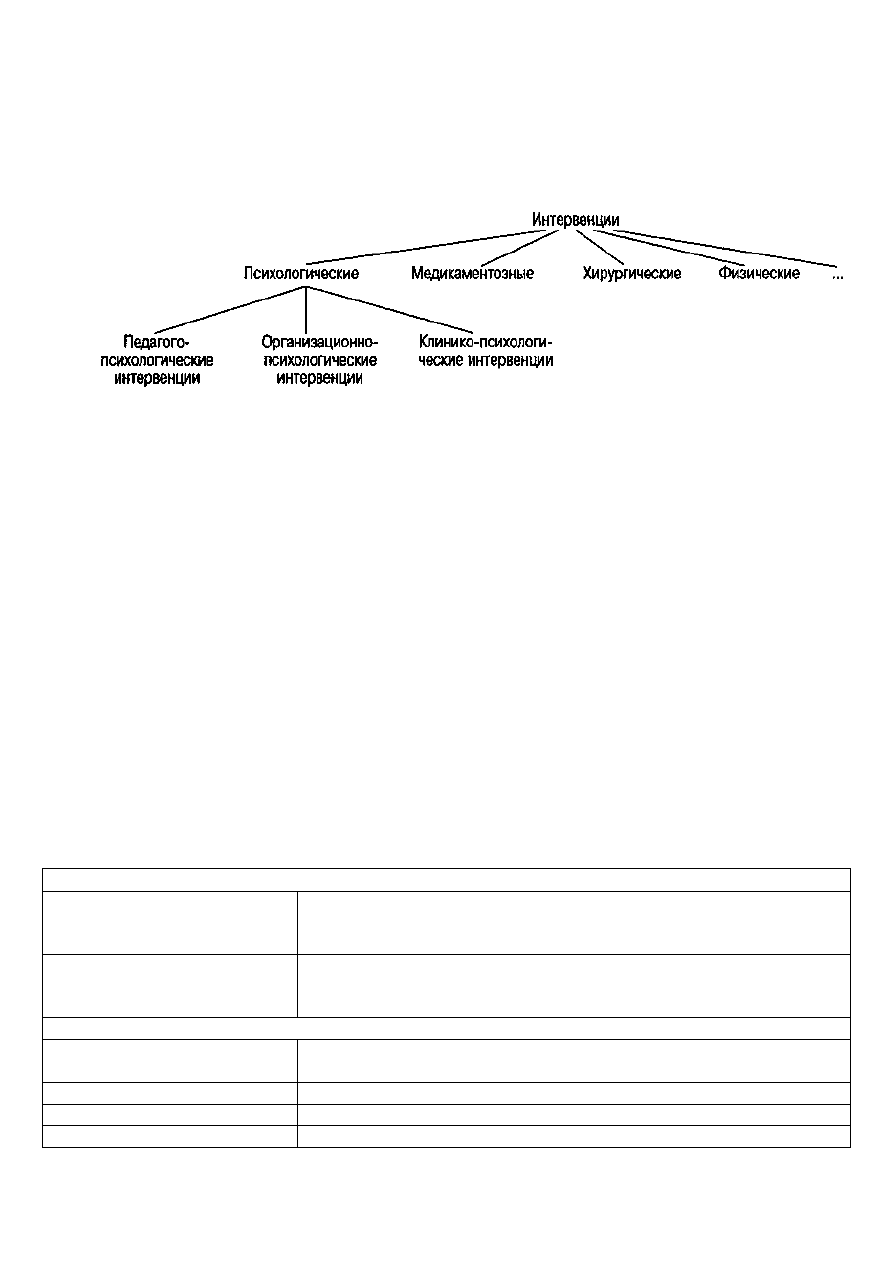
,
.
,
:
,
(
.
. 18.1);
.
,
,
. .
. 18.1.
,
,
«
» (Greif, 1976),
,
«
» (Kleinbeck & Schmidt, 1990) —
,
,
.
(
.,
, Argyle's «Social Skills at work», 1987).
,
,
,
,
(«mastery-learning»),
,
(Ingenkamp, 1979);
(
. Klauer, 1989; Hager, Elsner & Hübner, 1995).
—
-
.
2.
.
. 18.1.
18.1.
(1)
,
—
;
,
(2)
,
(
),
.
(
)
(3)
(4)
(5)
(
—
)
(6)
(1)
, (2)
, (3)
, (4)
, (5)
(6)
.

(1), (3), (4), (5) (6)
,
(2)
.
2.1.
—
.
—
,
,
—
,
.
,
,
—
, —
,
.
.
,
—
;
,
,
,
,
.
,
,
.
,
,
,
.
.
,
.
,
(
. Ernst, 1989). XVIII
,
«
» (
. Moritz, 1783).
,
(1856-1939)
—
(1867-1956)
(1856-1926) (
.
1).
(
)
.
,
» —
, —
.
2.2.
,
,
,
.
(1)
, (2)
(
) (3)
.
-
.
.
,
.
«
»;
,
(
Public Health
),
(
.
19).
—
,
,
.
.
,
(
,
),
,
.
,
,
(
.
21).
-
(
).
—
.
,