Материал: part07
Page 116 |
DICOM PS3.7 2020a - Message Exchange |
Each Service Class specification is required to document, as part of its SOP Class or Meta SOP Class, the application information it supports and how this information is negotiated between SCUs and SCPs. Service Class specifications shall specify, for both the SCU and SCP roles, the following:
•semantics of the application information (including the negotiation rules)
•encoding of the application information
•conditions for which the application information is mandatory and/or optional
•default conditions of the application information
Note
The use of the SOP Class Extended Negotiation is not limited to Service Classes defined by this Standard. It may also be used for privately defined Service Classes.
The Association-requester may only offer one SOP Class Extended Negotiation item for each SOP Class UID or Meta SOP Class that is present in the A-ASSOCIATE request.
If the SOP Class Extended Negotiation items do not exist in the A-ASSOCIATE indication they shall be omitted in the A-ASSOCIATE response.
D.3.3.5.1 SOP Class Extended Negotiation Sub-Item Structure (A-ASSOCIATE-RQ)
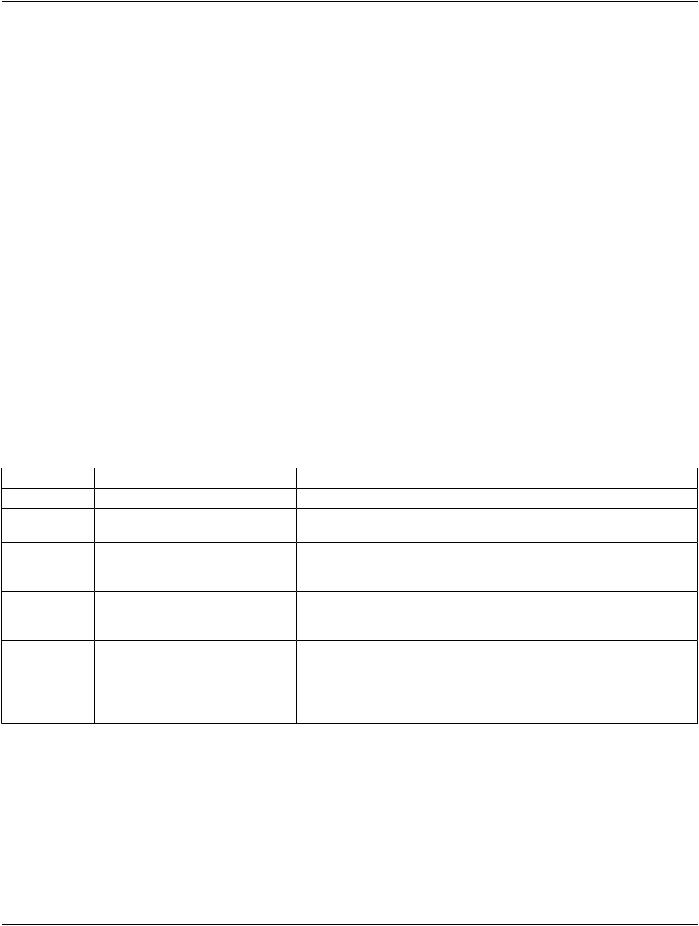
The SOP Class Extended Negotiation Sub-item shall be made of a sequence of mandatory fields followed by the Service-class-ap- plication-information field (specific for each Service Class specification). This Sub-Item is required per the specific Service Class specifications. Multiple SOP Class Extended Negotiation Sub-Items may be present in the User Data Item of the A-ASSOCIATE-RQ, however, only one Sub-Item per SOP Class UID shall be present. Table D.3-11 shows the sequence of mandatory fields.
TableD.3-11.SOPClassExtendedNegotiationSub-ItemFields(A-ASSOCIATE-RQandA-ASSOCIATE-AC)
Item Bytes |
Field Name |
Description of Field |
1 |
Item-type |
56H |
2 |
Reserved |
This reserved field shall be sent with a value 00H but not tested to this value |
|
|
when received. |
3-4 |
Item-Length |
This Item-length shall be the number of bytes from the first byte of the |
|
|
following field to the last byte of the Service-class-application-information |
|
|
field. It shall be encoded as an unsigned binary number. |
5-6 |
SOP-class-uid-length |
The SOP-class-uid-length shall be the number of bytes from the first byte of |
|
|
the following field to the last byte of the SOP-class-uid field. It shall be |
|
|
encoded as an unsigned binary number. |
7-xxx |
SOP-class-uid |
The SOP Class or Meta SOP Class identifier encoded as a UID as defined |
|
|
in PS3.5. |
xxx-xxx |
Service-class-application-informationThis field shall contain the application information specific to the Service |
|
|
|
ClassspecificationidentifiedbytheSOP-class-uid.Thesemanticsandvalue |
|
|
of this field is defined in the identified Service Class specification. |
D.3.3.5.2 SOP Class Extended Negotiation Sub-Item Structure (A-ASSOCIATE-AC)
The SOP Class Extended Negotiation Sub-item shall be made of a sequence of mandatory fields followed by the Service-class-ap- plication-information field (specific for each Service Class specification). This Sub-Item is required per the specific Service Class specifications. Multiple SOP Class Extended Negotiation Sub-Items may be present in the User Data Item of the A-ASSOCIATE-AC, however, only one Sub-Item per SOP Class UID shall be present. Table D.3-11 shows the sequence of mandatory fields.
- Standard -

DICOM PS3.7 2020a - Message Exchange |
Page 117 |
D.3.3.6 Service-Object Pair (SOP) Class Common Extended Negotiation
The SOP Class Common Extended Negotiation allows, at Association establishment, peer DICOM AEs to exchange application in- formation, the form of which is generic, and not specific to individual Service Classes, as compared to the information defined in D.3.3.5. This is an optional feature that Association-requesters and Association-acceptors may or may not choose to support.
TheinformationincludedforeachSOPClassforwhichasub-itemispresentconsistsofaServiceClassUIDand(optionally)aRelated
General SOP Class UID.
The Service Class UID conveys the Service Class of the SOP Class.
Note
Explicit conveyance of the Service Class may allow the selection of the proper format for the Service-class-application-in- formation of the SOP Class Extended Negotiation Sub-item.
The Related General SOP Class UID conveys zero or more Related General SOP Class for the SOP Class.
Note
1.Consider the example of negotiation of support for a Procedure Log Storage SOP Class. That SOP Class is of the Storage Service Class. The encoding of the IOD would be compatible with the more general Enhanced SR Storage SOP Class. Therefore, the following common extended negotiation sub-item could optionally be included:
SOP Class UID: 1.2.840.10008.5.1.4.1.1.88.40 Procedure Log
Service Class UID: 1.2.840.10008.4.2 Storage Service Class
Related General SOP Class UID: 1.2.840.10008.5.1.4.1.1.88.22 Enhanced SR
2.The Related SOP Class may be absent, though the Service Class may still be included. For example, there may be a new image storage SOP Class without a Related SOP Class defined in PS3.4, yet it is still useful to an Association-ac- ceptor to be informed that the new SOP Class is of the Storage Service Class:
SOP Class UID: 1.2.840.10008.5.1.4.1.1.7.1 MF Single Bit SC Image Storage
Service Class UID: 1.2.840.10008.4.2 Storage Service Class
Related General SOP Class UID: (none)
TheAssociation-requestermayonlyofferoneSOPClassCommonExtendedNegotiationitemforeachSOPClassUIDthatispresent in the A-ASSOCIATE request.
Noresponseisnecessary,hencetheSOPClassCommonExtendedNegotiationitemsshallbeomittedintheA-ASSOCIATEresponse.
D.3.3.6.1 SOP Class Common Extended Negotiation Sub-Item Structure (A-ASSOCIATE-RQ)
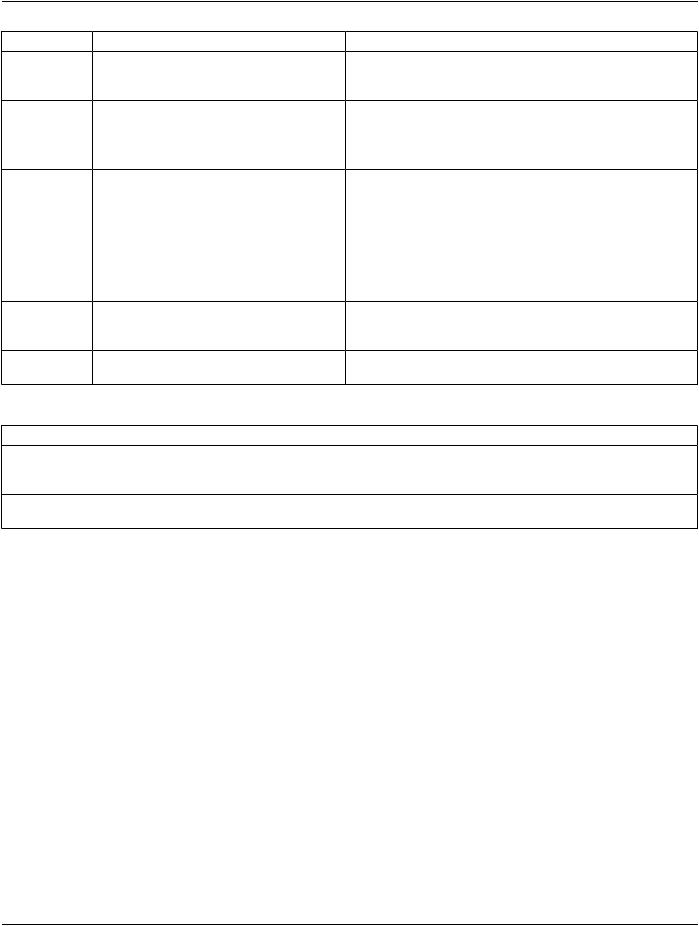
The SOP Class Common Extended Negotiation Sub-item shall be made of a sequence of mandatory fields, the last two of which may be zero-length. Multiple SOP Class Common Extended Negotiation Sub-Items may be present in the User Data Item of the A-ASSO- CIATE-RQ, however, only one Sub-Item per SOP Class UID shall be present. Table D.3-12 shows the sequence of mandatory fields.
Table D.3-12. SOP Class Common Extended Negotiation Sub-Item Fields (A-ASSOCIATE-RQ)
Item Bytes |
Field Name |
Description of Field |
1 |
Item-type |
57H |
2 |
Sub-item-version |
This field indicates the version of the Sub-item. Fields added to the |
|
|
Sub-item definition in succeeding editions of the Standard will not |
affectthesemanticsofpreviouslydefinedfields.Theversionofthe Sub-item defined in this edition of the Standard is 0.
- Standard -
Page 118 |
DICOM PS3.7 2020a - Message Exchange |
|
Item Bytes |
Field Name |
Description of Field |
3-4 |
Item-Length |
This Item-length shall be the number of bytes from the first byte of |
|
|
the following field to the last byte of the Reserved field. It shall be |
|
|
encoded as an unsigned binary number. |
5-6 |
SOP-class-uid-length |
The SOP-class-uid-length shall be the number of bytes in the |
|
|
SOP-class-uid field. It shall be encoded as an unsigned binary |
|
|
number. |
7-x |
SOP-class-uid |
The SOP Class identifier encoded as a UID as defined in PS3.5. |
(x+1) - (x+2) Service-class-uid-length |
The Service-class-uid-length shall be the number of bytes in the |
|
|
|
Service-class-uid field. It shall be encoded as an unsigned binary |
|
|
number. |
(x+3) - y |
Service-class-uid |
TheServiceClassidentifierencodedasaUIDasdefinedinPS3.5. |
(y+1) - (y+2) Related-general-sop-class-identification-lengthThe Related-general-sop-class-identification-length shall be the
|
|
number of bytes in the Related-general-sop-class-identification |
|
|
field. Shall be zero if no Related General SOP Classes are |
|
|
identified. |
(y+3) - z |
Related-general-sop-class-identification |
TheRelated-general-sop-class-identificationisasequenceofpairs |
|
|
of length and UID sub-fields. Each pair of sub-fields shall be |
|
|
formatted in accordance with Table D.3-13 |
(z+1) - k |
Reserved |
Reserved for additional fields of the sub-item. Shall be zero-length |
|
|
for Version 0 of Sub-item definition. |
Table D.3-13. Related-General-SOP-Class-Identification Sub-Fields
Bytes |
Sub-Field Name |
Description of Sub-Field |
1-2 |
Related-general-sop-class-uid-length |
The Related-general-sop-class-uid-length shall be the number of bytes |
|
|
in the Related-general-sop-class-uid sub-field. It shall be encoded as an |
|
|
unsigned binary number. |
3-n |
Related-general-sop-class-uid |
The Related General SOP Class identifier encoded as a UID as defined |
|
|
in PS3.5. |
D.3.3.7 User Identity Negotiation
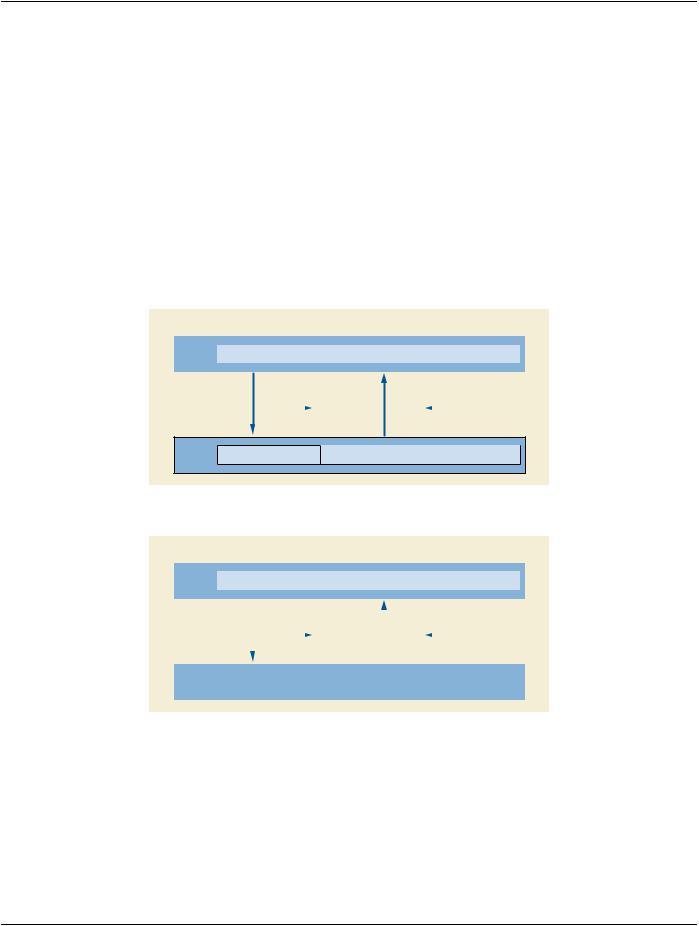
The User Identity Negotiation is used to notify the association acceptor of the user identity of the association requestor. It may also request that the association acceptor respond with the server identity. This negotiation is optional. If this sub-item is not present in the A-ASSOCIATE request the A-ASSOCIATE response shall not contain a user identity response sub-item.
The Association-requester conveys in the A-ASSOCIATE request:
•the form of user identity being provided, either a username, username and passcode, a Kerberos service ticket, a SAML assertion, or a JSON Web Token (JWT).
•an indication whether a positive server response is requested.
The Association-acceptor does not provide an A-ASSOCIATE response unless a positive response is requested and user authentic- ation succeeded. If a positive response was requested, the A-ASSOCIATE response shall contain a User Identity sub-item. If a Ker- beros ticket is used the response shall include a Kerberos server ticket.
Since a system may ignore request sub-items, the positive response must be requested if the association requestor requires confirm- ation. If the association acceptor does not support user identification it will accept the association without making a positive response. The association requestor can then decide whether to proceed.
The association acceptor may utilize the User Identity information provided during the association negotiation to populate the user information fields in DICOM audit trail messages. The association acceptor may utilize the User Identity information provided during the association negotiation to perform authorization controls during the performance of other DIMSE transactions on the same asso-
- Standard -
DICOM PS3.7 2020a - Message Exchange |
Page 119 |
ciation. The user identity information may also be used to modify the performance of DIMSE transactions for other purposes, such as workflow optimizations.
Note
1.User identity authorization controls may be simple "allow/disallow" rules, or they can be more complex scoping rules. For example, a query could be constrained to apply only to return information about patients that are associated with the identified user. The issues surrounding authorization controls can become very complex. The User Identity SOP conveysuseridentitytosupportusessuchasauthorizationcontrolsandauditcontrols.Itdoesnotspecifytheirbehavior.
2.The option to include a passcode along with the user identity enables a variety of non-Kerberos secure interfaces. Sending passwords in the clear is insecure, but there are single use password systems such as RFC-2289 and the varioussmarttokensthatdonotrequireprotection.ThepasswordmightalsobeprotectedbyTLSorothermechanisms.
3.ForJSONWebTokens(JWTs),RFC7519specifiesminimalrequirementsforencryption,MACandsignaturealgorithms; others may be supported as described in the DICOM Conformance Statement. The encoded format in the Primary-field of the A-ASSOCIATE-RQ is the same as what might be included in an HTTP Authorization: Bearer header field per RFC 6750 when accessing a Protected Resource on a Resource Server, to facilitate bridging between PS3.18 “PS3.18” and PS3.7 “PS3.7” implementations.
DICOM AE “A”
|
|
|
|
|
|
User Identification Sub-item |
Identification Type |
User |
|
|
(58H) |
(3) |
Identification |
|
|
|
|
|
|
|
|
|
|
|
A-ASSOCIATE-Request |
A-ASSOCIATE-Response |
||||
( A |
|
B) |
(B |
|
A) |
|
|
||||
DICOM AE “B”
User identification Sub-Item
Server Response
(58H)
Figure D.3-8. User Identity Negotiation (With Server Positive Response Requested)
DICOM AE “A”
|
|
|
|
|
|
User Identification Sub-item |
Identification Type |
Usernme |
|
|
(58H) |
(1) |
|
|
|
|
|
||
|
|
|
|
|
|
|
|
|
|
|
|
A-ASSOCIATE-Request |
|
A-ASSOCIATE-Response |
||||
|
|
|
||||||
DICOM AE “B” |
|
( A |
|
B) |
|
(B |
|
A) |
|
|
|
|
|||||
|
|
|
|
|
|
|
|
|
|
|
|
|
|
|
|
||
|
|
|
|
(No Sub-Item 58H) |
|
|
|
|
|
|
|
|
|
|
|
|
|
Figure D.3-9. User Identity Negotiation (Application Entity "A" Provides Username Identity) D.3.3.7.1 User Identity Sub-Item Structure (A-ASSOCIATE-RQ)
The User Identity Negotiation Sub-Item shall be made of a sequence of mandatory fixed and variable length fields. This Sub-Item is optional and if supported, only one User Identity Negotiation Sub-Item shall be present in the User Data Item of the A-ASSOCIATE- RQ. Table D.3-14 shows the sequence of the mandatory fields.
- Standard -

Page 120 DICOM PS3.7 2020a - Message Exchange
Table D.3-14. User Identity Negotiation Sub-Item Fields (A-ASSOCIATE-RQ)
Item Bytes |
Field Name |
|
Description of Field |
1 |
Item-type |
58H |
|
2 |
Reserved |
This reserved field shall be sent with a value 00H but not tested to this value when |
|
|
|
received. |
|
3 - 4 |
Item-length |
This Item-length shall be the number of bytes from the first byte of the following |
|
|
|
field to the last byte of the last field sent. It shall be encoded as an unsigned binary |
|
|
|
number. |
|
5 |
User-Identity-Type |
Field value shall be in the range 1 to 4 with the following meanings: |
|
|
|
1 |
- Username as a string in UTF-8 |
|
|
2 |
- Username as a string in UTF-8 and passcode |
|
|
3 |
- Kerberos Service ticket |
|
|
4 |
- SAML Assertion |
|
|
5 |
- JSON Web Token (JWT) |
|
|
Other values are reserved for future standardization. |
|
6 |
Positive-response-requestedField value: |
||
|
|
0 |
- no response requested |
|
|
1 |
- positive response requested |
7-8 |
Primary-field-length |
The User-Identity-Length shall contain the length of the User-Identity value. |
|
9-n |
Primary-field |
This field shall convey the user identity, either the username as a series of |
|
|
|
characters, or the Kerberos Service ticket encoded in accordance with RFC-1510, |
|
|
|
ortheJWTencodedinaccordancewithRFC7519usingbase64urlencodedparts. |
|
n+1-n+2 |
Secondary-field-length |
Thisfieldshallbenon-zeroonlyifUser-Identity-Typehasthevalue2.Itshallcontain |
|
|
|
the length of the secondary-field. |
|
n+3-m |
Secondary-field |
ThisfieldshallbepresentonlyifUser-Identity-Typehasthevalue2.Itshallcontain |
|
|
|
the Passcode value. |
|
D.3.3.7.2 User Identity Sub-Item Structure (A-ASSOCIATE-AC)
The User Identity Sub-Item shall be made of a sequence of mandatory fixed and variable length fields. This Sub-Item is optional and if supported, only one User Identity Sub-Item shall be present in the User Data Item of the A-ASSOCIATE-AC. Table D.3-15 shows the sequence of the mandatory fields.
Table D.3-15. User Identity Negotiation Sub-Item Fields (A-ASSOCIATE-AC)
Item Bytes |
Field Name |
Description of Field |
1 |
Item-type |
59H |
2 |
Reserved |
This reserved field shall be sent with a value 00H but not tested to this value when |
|
|
received. |
3 - 4 |
Item-length |
This Item-length shall be the number of bytes from the first byte of the following field |
|
|
to the last byte of the final field. It shall be encoded as an unsigned binary number. |
5-6 |
Server-response-length |
This field shall contain the number of bytes in the Server-response. May be zero. |
- Standard -