Материал: 100_Cases_in_Clinical_Medicine
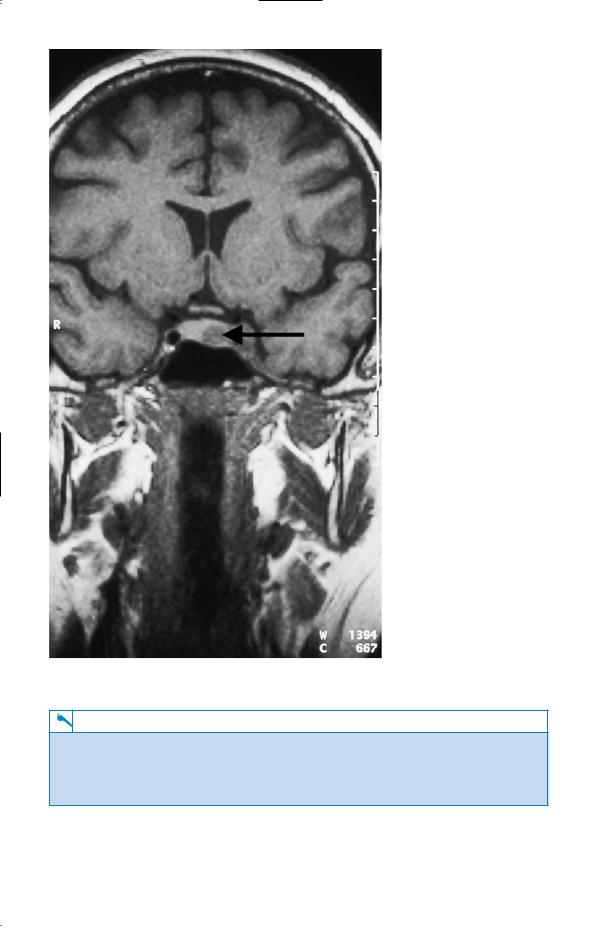
Figure 11.1 Magnetic resonance imaging scan through the pituitary.
KEY POINTS
•Patients with rapid-onset obesity should have endocrine causes excluded.
•Corticosteroid treatment is the commonest cause for Cushing’s syndrome.
•Patients with severe and rapid-onset Cushing’s syndrome often have ectopic ACTH secretion or cortisol-secreting adrenal tumours.
29
This page intentionally left blank

CASE 12: PERSONALITY CHANGE
History
A 64-year-old investments manager is causing increasing concern to his wife owing to increasing forgetfulness and irritability. His mother died 3 years previously from Alzheimer’s disease, and his wife is concerned that he is dementing. She had also noticed that he has been drinking more fluid and getting up 2–3 times in the night to pass urine. She persuaded him to see their general practitioner (GP) who found no symptoms of prostatism, and no other relevant past or family history. There was no objective evidence of dementia, and physical examination was normal, including rectal examination. Investigations showed normal urine, fasting blood glucose, urea, creatinine and electrolytes. A wait and see policy was advised with as much reduction in stress as possible and adequate sleep.
Over the next 2 months his colleagues begin to question his performance, then one day at work he collapses with severe and sudden-onset left loin pain, radiating down the left flank to his groin and left testicle. The pain is colicky and accompanied by nausea and vomiting. He is taken to the emergency department.
Examination
The only physical abnormalities are pallor, sweating, and slight left loin tenderness.
INVESTIGATIONS
|
|
Normal |
Haemoglobin |
14.0 g/dL |
13.3–17.7 g/dL |
White cell count |
9.9 % 109/L |
3.9–10.6 % 109/L |
Platelets |
234 % 109/L |
150–440 % 109/L |
Sodium |
141 mmol/L |
135–145 mmol/L |
Potassium |
3.9 mmol/L |
3.5–5.0 mmol/L |
Urea |
6.5 mmol/L |
2.5–6.7 mmol/L |
Creatinine |
111 &mol/L |
70–120 &mol/L |
Random glucose |
5.2 mmol/L |
4.0–6.0 mmol/L |
Urine: – protein; ''' blood |
|
|
Questions
•What is the likely diagnosis?
•What other investigations would you perform?
31

ANSWER 12
The acute abdominal pain and the haematuria indicate ureteric colic due to a renal stone. The polyuria and polydipsia and the mental changes point to hypercalcaemia causing all three problems. His serum calcium was raised at 3.3 mmol/L (normal range: 2.12–2.65 mmol/L), corrected for serum albumin concentration, the phosphate was reduced at 0.6 mmol/L (normal range: 0.8–1.45 mmol/L)) and the alkaline phosphatase raised at 587 IU/L (normal range: 30–300 IU/L ). This combination of abnormal bone chemistry indicates hyperparathyroidism as the cause of the hypercalcaemia, confirmed by a raised serum parathormone (PTH), and a radio-isotope scan showing a single parathyroid tumour. Other investigations were a renal ultrasound showing a normal urinary tract with no detectable stones. It was assumed that the patient had passed a small stone at the time of the ureteric colic and haematuria. A skeletal X-ray survey was normal, showing no bony metastases and no bony changes of hyperparathyroidism.
Hypercalcaemia of any cause can cause polyuria and polydipsia, and can affect mental function. Long-standing hypercalcaemia (therefore not usually in the case of malignancy) also causes renal stones. For some reason primary hyperparathyroidism causes either stones or bone disease, rarely both together.
!Metabolic causes of dementia
•Hypothyroidism
•Vitamin B12 deficiency
•Uraemia
•Hypercalcaemia
KEY POINTS
•Underlying causes of mental disease must be sought and not ascribed to ageing.
•In a patient with a history of ureteric colic, failure to demonstrate stone(s) in the urinary tract does not exclude nephrolothiasis.
32

NEUROLOGY
CASE 13: A WEAK HAND
History
A 67-year-old man is referred to a neurologist by his general practitioner (GP). His symptoms are of weakness and wasting of the muscles of his left hand. He has noticed the weakness is worse after using his hand, for example after using a screwdriver. He has also noticed cramps in his forearm muscles. His speech is slightly slurred and he has started choking after taking fluids. Past medical history is notable for hypertension for 15 years and a myocardial infarction 3 years previously. Medication consists of simvastatin, aspirin and atenolol. He is a retired university lecturer. He lives with his wife and they have two grown up children. He is a non-smoker and drinks a bottle of wine a week.
Examination
Blood pressure is 146/88 mmHg. There are no abnormalities to be found in the cardiovascular or respiratory systems or the abdomen. There is some wasting of the muscles in the upper limbs, particularly in the left hand. There is some fasciculation in the muscles of the upper arms bilaterally. Power is globally reduced in the left hand, and also slightly reduced in the right hand. Muscle tone is normal. The biceps and triceps jerks are brisk bilaterally. There is no sensory loss. There is slight dysarthria.
Questions
•What is the diagnosis?
•What is the prognosis?
33