Материал: 2507
the United Kingdom.
The relative size of drinks in Spain is a good guide to the scale of the problem. When you order in a bar, the standard serving of beer is a caña - a glass with a volume of 200 millilitres, just over a third of the size of a British pint.
Many people start drinking in their early teens in Spain, but not just with their friends - often with their parents.
There's a high social tolerance for alcohol consumption and the atmosphere in which drinking is done - in bars, restaurants - is usually relaxed and more suited to slower drinking than in some other countries. It is rare to see alcohol-fuelled violence.
That is not so say that Spain is immune from alcohol issues. |
|
The Ministry for Health says about 5% of Spaniards have an alcohol- |
|
related problem. |
И |
|
|
And, a phenomenon known as Botellon (Big Bottle), where young |
|
|
Д |
people meet and consume alcohol on the street is a cause of concern for some Spaniards who say it encourages binge drinking. Botellon has been banned in some cities.
But you only have to go out at night in Spain to see that, generally,
alcohol is well under control.
in Germany and led to some бlegislative changes.
GERMANY |
By Danny Wood |
и |
|
A 16-year-old German pupilАdied after drinking over 50 tequila shots. |
|
His death brought attention to the rising problem of teenage alcoholism |
|
|
С |
The bar owner who served the boy was arrested and is awaiting trial. He is charged with causing grievous bodily harm resulting in death.
The government also decided to ban "drink all you can" parties, where guests could pay a certain amount to drink until they literally drop. It was at such a party where the 16-year-old had died.
Although the overall consumption of alcohol here has declined during the past years, some now drink more than ever. German teenagers are number two consumers of alcohol in Europe, topped only by British youth.
The problem is blamed on the fact that drinking is still a big part of German culture and that the alcohol industry is specifically targeting young people as new customers.
By Nadja Korinth
ITALY
116
While Britain's teenagers have gained notoriety for binge drinking, their Latin cousins have always been renowned for their restraint.
The quickest way to lose respect of your Italian friends and neighbours is to get drunk in public. Drinking on the streets is considered disrespectful.
But in the past few years, this more reserved, continental etiquette to drinking has been changing.
Over the summer the Italian government commissioned a series of reports which reveals a worrying new trend.
According to figures from the health ministry 17% of the Italian population are binge drinking at least once a month. One in five teenag-
ers admits to being drunk regularly. |
|
In 1996 there were 19,000 alcoholics in Italy receiving regular |
|
treatment – now there are 54,000. |
И |
|
|
And this, says Emanuele Scafato, from the Italian Institute for |
|
Health, is merely the tip of iceberg. |
Д |
|
|
"Young people no longer drink for enjoyment," he said. "They |
|
drink to get drunk. |
|
"The relationship with alcohol is very different to what it was 10 |
|
years ago. |
|
encourages young people to drinkАto be 'cool'. These days you can't be 'part of the gang' in Italyиunless you drink.
unit. Drinking in moderationбwas something you learned from your father.
"We blame the growth in the sale of alcopops, the way the industry
"The second problem – is the breakdown of the traditional family С
"Young people were encouraged to enjoy a glass of wine at dinner.
Now parents work longer hours, the rhythm of life is changing and so is the father-son relationship."
The authorities in Rome have tried to crack down on binge drinking and the related violence, forcing bar owners to close early and to sell drinks in plastic beakers instead of glasses.
Last month the Ministry for Transportation forced through new changes to the law. It is now illegal to sell alcohol in discos after 2am.
By Christian Fraser http://news.bbc.co.uk/2/hi/uk_news/7093143.stm
117
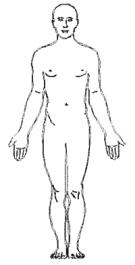
20. What effect does alcohol have on the body? Read the following information and mark in the picture (pic. 28) the organs that are affected due to excessive drinking:
|
|
|
|
И |
|
|
|
Д |
|
|
|
Pic. 28 |
|
|
Intoxication |
|
А |
|
|
|
|
|
|
|
The immediate effects of alcohol depend upon the amount of alcohol |
||||
|
б |
|
|
|
in the blood and whether the person is an experienced drinker. As the |
||||
|
и |
|
|
|
blood alcohol rises, drinkers feel more relaxed and are often more talkative. They become less aware of their behaviour and judgement is often
impaired. Loss of co-ordination and drowsiness may occur. The risk of accidents rises, particularlyСfor those involved in operating machinery and
driving cars. An individual with a blood alcohol level of 0.05 has twice the risk of having a motor vehicle accident as one with a blood alcohol level of zero.
Long term effects
Tolerance |
Ability to drink progressively larger amounts without ap- |
|
parent intoxication. |
Withdrawal |
Anxiety, agitation, confusion, shakes, fits etc which occur |
|
when alcohol consumption is suddenly stopped. |
Alcohol |
Craving, continuing to drink despite adverse effects. |
seeking |
|
behaviour |
|
Medical |
Liver inflammation and fat deposition. These may pro- |
Liver disease |
gress to liver failure. Cirrhosis (scarring). |
|
118 |
Stomach and |
|
Heartburn and indigestion due to an inflamed gullet (re- |
|||||
bowel |
|
|
flux) or stomach (gastritis). |
|
|||
diseases |
|
Diarrhoea. Inflammation of the pancreas (pancreatitis) |
|||||
|
|
|
leading to abdominal pain or inability to absorb food. |
||||
|
|
|
Cancer of the liver, gullet, bowel. |
||||
Brain |
|
|
Memory loss and difficulty learning (dementia). |
||||
damage |
|
|
Poor co-ordination and balance. |
||||
Other |
|
|
Damage to nerves, leading to numbness in the legs and |
||||
neurological |
|
difficulty walking. |
|
|
|||
diseases |
|
|
|
|
|
|
|
Heart |
& |
|
Heart failure (leading to shortness of breath and ankle |
||||
blood |
vessel |
|
swelling). |
|
|
|
|
diseases |
|
Palpitations. |
|
|
И |
||
|
|
|
High blood pressure (hypertension). |
||||
Sexual |
& |
|
Damage to the testicles leading to impotence. |
||||
reproductive |
|
|
|
|
Д |
||
|
Damage to the unborn baby. |
|
|||||
disorders |
|
|
|
|
|
|
|
Bone & joint |
|
Gout (painful swelling of the joints, most commonly the |
|||||
disorders |
|
big toe). |
|
А |
|
||
|
|
|
|
|
|||
|
|
|
Osteoporosis - thinning of the bones which may lead to |
||||
|
|
|
|
б |
|
|
|
|
|
|
fractures (broken bones). |
|
|||
Accidents |
|
Head injury. |
|
|
|
||
|
|
|
и |
|
|
|
|
|
|
|
Blood clots around the brain. |
|
|||
|
|
|
Broken bones (especially the ribs). |
||||
|
|
|
С |
|
|
|
|
|
|
|
Road accidents. |
|
|
|
|
|
|
|
Accidents at work or home. |
|
|||
Nutrition |
|
Malnutrition. |
|
|
|
||
|
|
|
Obesity. |
|
|
|
|
Other |
|
|
Interactions with other drugs e.g. drugs used to treat epi- |
||||
|
|
|
lepsy. |
|
|
|
|
Psychological |
|
Difficulty sleeping. |
|
|
|||
|
|
|
Anxiety and agitation. |
|
|
||
|
|
|
Depression and inability to cope. |
||||
|
|
|
Confusion and panic attacks. |
|
|||
|
|
|
Alcoholic 'blackouts'. |
|
|
||
|
|
|
Suicide. |
|
|
|
|
Social |
Do- |
|
Loss of friends. |
|
|
|
|
mestic |
prob- |
|
Difficulties in marriage or others significant relationships. |
||||
lems |
|
|
Separation and divorce. |
|
|||
|
|
|
|
|
119 |
|
|

Neglect of children.
Occupational Lateness or absences from work.
Demotion/failure to gain promotion.
Financial Loss of regular income from employment. problems Hardship from money spent on alcohol.
Gambling debts.
Legal |
Drink-driving offences/loss of licence. |
problems |
Property crime. |
|
Assault. |
|
Homicide. |
http://www.nevdgp.org.au/info/gastro/alcohol.htm
21. Match the word on the left with the word on the right. |
||||||
1) |
alcohol; |
|
|
a) |
И |
|
|
|
monopoly; |
||||
2) |
worrying; |
|
b) |
changes; |
||
3) |
state; |
|
|
Д |
||
|
|
c) |
treatment; |
|||
4) |
father-son; |
|
d) |
consumption; |
||
5) |
bar; |
|
|
e) |
accident; |
|
6) |
social; |
|
|
f) |
drinking; |
|
7) |
plastic; |
б |
g) |
loss; |
||
8) |
binge; |
h) |
tolerance; |
|||
|
|
|||||
9) |
vehicle; |
|
|
i) |
beakers; |
|
10) |
и |
Аj) owners; |
||||
alcoholic; |
||||||
11) |
liver; |
|
|
k) |
atmosphere; |
|
С |
|
|
l) |
relationship; |
||
12) |
legislative; |
|
||||
13) |
regular; |
|
|
m) |
trend; |
|
14) |
relaxed; |
|
n) |
beverages; |
||
15) |
memory; |
|
o) |
inflammation. |
||
22. Write 10 sentences incorporating these word combinations.
120