Материал: 2507
9. Match the beginnings of the sentences with their endings. Highlight the things that damage the environment.
1.The Government is introducing strict new rules …
2.Farmers contribute to environmental damage …
3.Emissions from factories in northern Germany …
4.Tropical rainforests have always helped to keep the environment in balance …
5.Exhaust fumes from cars and other vehicles cause …
a) but recent deforestation means they no longer absorb as much carbon dioxide as they used to.
b) by spraying crops with pesticides.
10. Use the words and phrases from ex. 5 – 9Иto describe your city.
c) affect the environment in large parts of Scandinavia. d) on the dumping of toxic waste by industry.
e) a great deal of damage to the environment.
11. Match a word on the left with a word on the right to make common |
|||
expressions: |
Д |
||
А |
|||
|
|
||
|
|
acidиб layer |
|
|
|
С |
|
12. Now use the phrases in the following sentences: |
|||
1. |
The gradual rise in the earth temperature is known as ……… |
||
2. |
When heat gets trapped in the earth atmosphere, it is known as the |
||
……… |
|
||
3. |
Scientists have found holes in the ………, particularly over Antarctica. |
||
4. |
Rain mixed with toxic chemicals from factories is known as ……… |
||
13.Look at the pictures in ex. 14 – 15. What do they make you think
of?
14.Read the title of the text. What do you think it is about? Write two questions you expect to be answered in the text. Read the text and check if you could find the answers to your questions.
357
Introduction: Planet Under Pressure
Planet Under Pressure is a six-part BBC News Online series looking at some of the most pressing environmental issues facing the human race today.
Read the first part of the article and say what the human pressure on the Planet is.
By Alex Kirby
BBC News Online environment correspondent
We are a successful breed. Our advance from our hominid origins has |
|
|
И |
brought us near-dominance of the world, and a rapidly accelerating under- |
|
standing of it. |
Д |
Scientists now say we are in a new stage of the Earth's history, the Anthropocene Epoch, when we ourselves have become the globe's principal force.
But several eminent scientists are concerned that we have become too successful - that the unprecedented human pressure on the Earth's ecosystems threatens our future as a species.
We confront problems more intractable than any previous generation, some |
||||
of them at the moment apparentlyАinsoluble. |
||||
|
|
|
|
б |
15. Read the second part of the article and match the problems with |
||||
the paragraphs that describe them. |
||||
a. |
Energy. |
|
и |
|
|
|
|
||
b. |
Biodiversity. |
|
|
|
c. |
Human population. |
|
||
d. |
Pollution. |
С |
|
|
|
|
|
||
e. |
Climate change. |
|
|
|
f. |
Food. |
|
|
|
g. |
Water. |
|
|
|
358
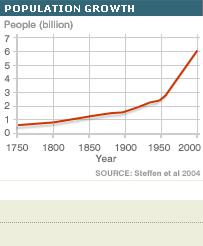
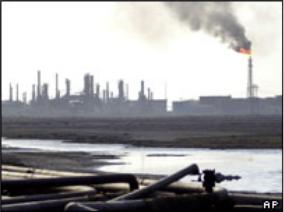
Pic. 220
16. Find and underline the words in the first part of the article that mean:
1)a person who studies or practises any of theИsciences or who uses scientific methods;
2)a system involving the interactions betweenДa community of living organisms in a particular area and its nonliving environment;
3)all the people of approximately the same age, especially when considered as sharing certain attitudes, etc.Аб
|
|
|
и |
explain them and then write the words in your language. |
|||
1) |
suffer; |
С |
|
|
|
||
2) |
hunger; |
|
|
3) |
malnutrition; |
|
|
4) |
productive land; |
||
5) |
water stress; |
|
|
6) |
supplies; |
|
|
7) |
avoidable; |
|
|
8) |
species losses; |
|
|
9) |
extinction phase; |
||
10) |
hazardous chemicals; |
||
11) |
unhealthy concentrations; |
||
12) |
urgent; |
|
|
13) |
climate change; |
||
14) |
population growth; |
||
15) |
poverty; |
|
|
|
|
|
360 |