31.Choose any five words and make sentences to describe Picture 13.
32.Read the second part of the article and match the headings with the paragraphs.
a. Trade-off b. For one and all c. Chronic problem 1.
Chemicals are a frequent pollutant. When we think of chemical contamination it is often images of events like Bhopal (1) that come to mind.
But the problem is widespread. One study says 7-20% of cancers are attributable to poor air and pollution in homes and workplaces.
The WHO, concerned about chemicals that persist and build up in the
body, especially in the young, says we may "be conducting a large-scale |
experiment with children's health". |
И |
|
Some man-made chemicals, endocrine disruptors (2) like phthalates (3)
And the chemicals climb the food chain,Дfrom fish to mammals - and to us. About 70,000 chemicals are on the market, with around 1,500 new ones
and nonylphenol (4) - a breakdown product (5) of spermicides, cosmetics
and detergents - are blamed for causing changes in the genitals of some animals.
Affected species include polar bears - so not even the Arctic is immune.
vival.
appearing annually. At least 30,000 are thought never to have been com- |
prehensively tested for their possibleАrisks to people. |
2. |
|
б |
|
|
But the snag is that modern society demands |
|
и |
many of them, and some are essential for sur- |
|
С |
|
So while we invoke the precautionary principle, which always recommends erring on the side of caution, we have to recognise there will be trade-offs to be made.
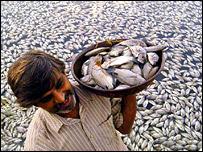
Pic. 221
Kankaria Lake in Ahmadabad, India (pic. 221).
The pesticide DDT does great damage to wildlife and can affect the human nervous system, but can also be effective against malaria. Where does the priority lie?