Материал: voronina_ev_sotsialnokulturnaia_sfera_obshcheniia

practical |
a someone who believes things easily, even if it's obvious that |
joke |
they're not true |
hoax |
b to believe something that isn't true |
taken in by |
c to trick people into believing something that's not true, usually |
|
on a larger scale |
gullible |
d a practical joker |
prankster |
e a type of joke which is played at someone else's expense |
6.c Listen to the people discussing how April Fool’s Day is celebrated in England. Match the speakers with what they say.
Kate |
A My flatmate changed my clock so I ended up getting up a whole |
|
hour earlier than I needed to. |
Jackie |
B If somebody makes somebody else look rather silly, by telling |
|
them something that isn’t true, by playing a practical joke on them. |
Carrie |
C Traditionally in England the jokes only last until noon midday. |
6.d Listen again and decide whether the statements below are true (T) or false (F).
1Jackie didn’t realise that her flatmate had played a joke on her.
2On April Fool’s Day people are allowed to play a trick on someone they know.
3The people in charge of the media rarely play tricks on their audience.
4In 1965, the BBC started broadcasting smells through the airwaves.
5In Ireland, France, and the USA, the jokes can be played all day.
6.e Tell about the way April Fool’s Day is celebrated in England.
7. Writing and Speaking: Project Work
6.a Find some information on one of the following topics (you can use any information available on the Internet or in books / magazines):
the most exciting festivals in the world
unusual festivals / traditions
the festivals I’d like to take part in
116

Write theses in order to give a brief oral presentation (5-6 minutes) of the topic you’ve chosen. Don’t forget to
include some visual aids (Power Point Microsoft software can help you)
structure your theses
include the phrases which will help your audience follow what you’re talking about (see ex.6.b).
6.b Match the phrases in the box with the appropriate point in the presentation plan.
Today I’ll be showing you/ reporting on … The subject / topic of my presentation is … Let’s now look at the next slide which shows
…
Are there any questions?
My presentation will take about 10 minutes. There will be time for questions after my presentation.
To conclude / In conclusion, I’d like to …
In this part of my presentation, I’d like to talk about …
I’d like to summarise what I’ve said so far … So much for point two.
It’s a pleasure to welcome you today Let’s now move on / turn to …
Well, that brings me to the end of my presentation.
Let me just start by introducing myself. My name is …
I’ve divided my presentation into three main parts.
1Introduction
a welcoming the audience b introducing yourself
cintroducing your topic and purpose
dmentioning the structure, timing and question time of the presentation
2 The main part
asaying what is coming
bdescribing visuals
csummarising every point
eindicating the end of the section and moving to the next part
3 Conclusion
aindicating the end of your talk
bsummarising points
cinviting questions
117
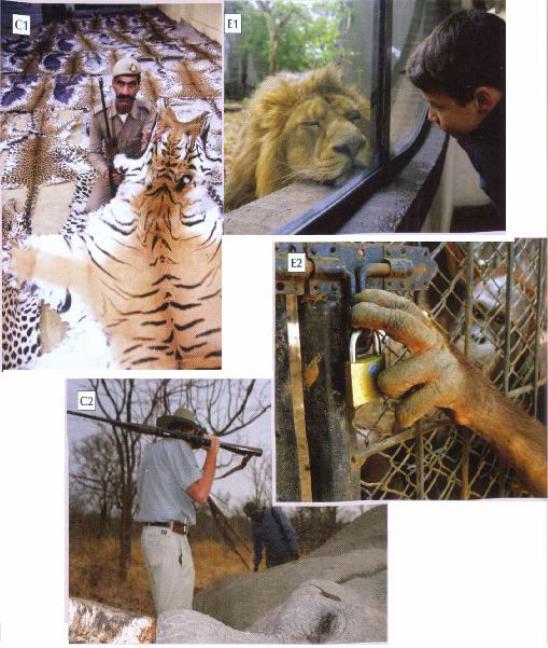
Picture Bank
118
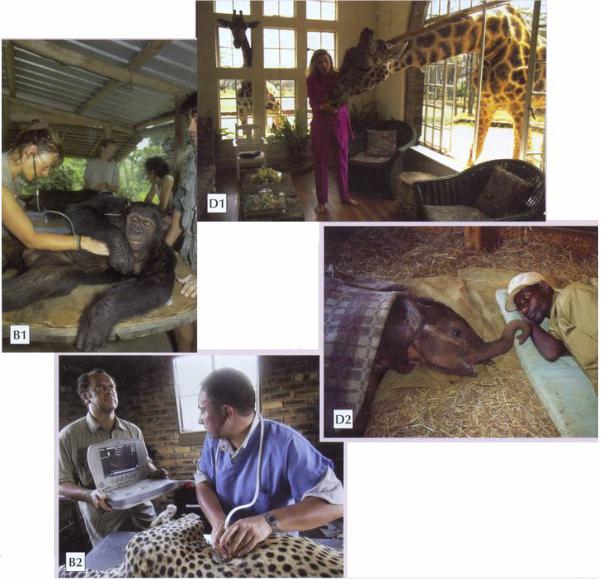
Pictures for student B.
119
Учебное издание
СОЦИАЛЬНО-КУЛЬТУРНАЯ СФЕРА ОБЩЕНИЯ
Учебно-методическое пособие для студентов естественно-научных факультетов
Составители: Воронина Елена Владимировна,
Дробышева Татьяна Владиславовна, Кривенко Людмила Александровна
Подп. в печ. 23.07.2010. Формат 60×84/16.
Усл. печ. л. 7,0. Тираж 300 экз. Заказ 1016.
Издательско-полиграфический центр Воронежского государственного университета.
394000, г. Воронеж, пл. им. Ленина, 10. Тел. (факс): +7 (4732) 598-026 http://www.ppc.vsu.ru; e-mail: pp_center@ppc.vsu.ru
Отпечатано с готового оригинал-макета в типографии Издательско-полиграфического центра
Воронежского государственного университета. 394000, г. Воронеж, ул. Пушкинская, 3. Тел. 204-133