Материал: 2076

immersive world filled with interesting characters and top-notch voice acting, it should find a home in your PC gaming library.
25. Skim the text. Make up a list of computer science terms and translate them. Read the text and answer the questions given below.
A web search engine is a software system that is designed to search for information on the World Wide Web. The search results are generally presented in a line of results often referred to as search engine results pages (SERPs). The information may be a mix of web pages, images, and other
types |
of files. |
Some search |
engines |
also mine |
|
data available |
|
in databases or open |
directories. Unlike web |
directories, |
which |
are |
|||
maintained only by human editors, search engines also maintain real- |
|||||||
С |
|
|
|
|
|
|
|
time information by running an algorithm on a web crawler. A search engine |
|||||||
maintains the following processes in near real time: |
|
|
|
||||
1. Web crawling |
|
|
|
|
|
|
|
2. Indexing |
|
|
|
|
|
|
|
и3. Searching |
|
|
|
|
|
||
Web search engines get their information by web crawling from site to |
|||||||
site. The "spider" checks for the standard filename robots.txt, addressed to it, |
|||||||
before sending certain information back to be indexed depending on many |
|||||||
factors, |
such as |
the titles, page |
content, JavaScript, Cascading |
Style |
|||
Sheets (CSS), headings, etc. |
|
|
|
|
|
||
Indexing means associating words and other definable tokens found on |
|||||||
web pages to their domain names and HTML-based fields. The associations |
|||||||
are madeбАin a public database, made available for web search queries. A |
|||||||
query from a user can be a single word. The index helps find information |
|||||||
relating to the query as quickly as possible. |
|
|
|
|
|||
Between visits by the spider, the cached version of page (some or all the |
|||||||
content needed to render it) stored in the search engine working memory is |
|||||||
|
|
Д |
|
||||
quickly sent to an inquirer. If a visit is overdue, the search engine can just act |
|||||||
as a web proxy instead. In this case the page may differ from the search terms |
|||||||
indexed.https://en.wikipedia.org/wiki/Web_search |
engine |
- |
cite |
note- |
|||
Jawadekar2011-14 The cached page holds the appearance of the version |
|||||||
whose words were indexed, so a cached version of a page can be useful to the |
|||||||
|
|
|
И |
||||
web site when the actual page has been lost, but this problem is also considered a mild form of linkrot.
106
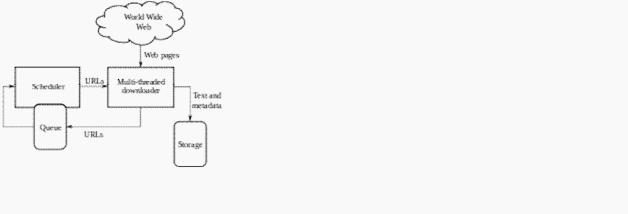
СHigh-level architecture of a standard Web crawler
Typically when a user enters a query into a search engine it is a иfew keywords. The index already has the names of the sites containing the
keywords, and these are instantly obtained from the index. The real
processing load is in generating the web pages that are the search results list:
and markup of the snippets showing the context of the keywords matched. These are only part of the processing each search results web page requires, and further pages (next to the top) require more of this post processing.
Every page in the entire list must be weighted according to information in the indexes. ThenбАthe top search result item requires the lookup, reconstruction,
Beyond simple keyword lookups, search engines offer their own GUIor command-driven operators and search parameters to refine the search results. These provide the necessary controls for the user engaged in the
feedback loop users create by filtering and weighting while refining the
clicking "Show search tools" in the leftmost column of the initial search
search results, given the initial pages of the first search results. For example, from 2007 the Google.com searchДengine has allowed one to filter by date by
results page, and then selecting the desired date range.] It's also possible
to weight by date because each page has a modification time. Most search
that allow the user to refine and extend the terms of the search. The engine looks for the words or phrases exactly as entered. Some search engines provide an advanced feature called proximity search, which allows users to
engines support the use of the boolean operators AND, OR and NOT to help end users refine the search query. Boolean operatorsИare for literal searches
define the distance between keywords. There is also concept-based
searching where the research involves using statistical analysis on pages containing the words or phrases you search for. As well, natural language queries allow the user to type a question in the same form one would ask it to a human. A site like this would be ask.com.
The usefulness of a search engine depends on the relevance of the result set it gives back. While there may be millions of web pages that include a particular word or phrase, some pages may be more relevant, popular, or authoritative than others. Most search engines employ methods
107
to rank the results to provide the "best" results first. How a search engine decides which pages are the best matches, and what order the results should be shown in, varies widely from one engine to another. The methods also change over time as Internet usage changes and new techniques evolve. There are two main types of search engine that have evolved: one is a system of predefined and hierarchically ordered keywords that humans have
Сprogrammed extensively. The other is a system that generates an "inverted index" by analyzing texts it locates. This first form relies much more heavily on the computer itself to do the bulk of the work.
Most Web search engines are commercial ventures supported иby advertising revenue and thus some of them allow advertisers to have their listings ranked higher in search results for a fee. Search engines that do not accept money for their search results make money by running search related ads alongside the regular search engine results. The search engines make money everyбАtime someone clicks on one of these ads.
26. Read the text. What search engines are offered in this text? What are their advantages and disadvantages?
DIFFERENT TYPES OF SEARCH ENGINES
When people mention the term "search engine", it is often used generically to describe both crawler-based search engines and human-powered directories. In fact, these two typesДof search engines gather their listings in radically different ways and therefore are inherently different.
Crawler-based search engines, such as Google, AllTheWeb and Alta Vista, create their listings automatically by using a piece of software to “crawl” or “spider” the web and then index what it finds to build the search base. Web page changes can be dynamically caughtИby crawler-based search engines and will affect how these web pages get listed in the search results.
Crawler-based search engines are good when you have a specific search topic in mind and can be very efficient in finding relevant information in this situation. However, when the search topic is general, crawler-base search engines may return hundreds of thousands of irrelevant responses to simple search requests, including lengthy documents in which your keyword appears only once.
Human-powered directories, such as the Yahoo directory, Open Directory and LookSmart, depend on human editors to create their listings. Typically, webmasters submit a short description to the directory for their websites, or editors write one for the sites they review, and these manually edited descriptions will form the search base. Therefore, changes made to
108

individual web pages will have no effect on how these pages get listed in the search results.
Human-powered directories are good when you are interested in a general topic of search. In this situation, a directory can guide and help you narrow your search and get refined results. Therefore, search results found in a human-powered directory are usually more relevant to the search topic and more accurate. However, this is not an efficient way to find information when a specific search topic is in mind.
|
|
|
Search Engines |
|
|
|
Types |
|
|
|
|
|
|
|
|
|
|
|
|||
|
|
|
|
|
|
|
|
|
|
|
|
|
|
|
|
|
Crawler-based search engine |
|
|||
С |
|
|
|
|
|
|
||||
|
|
|
AllTheWeb |
|
|
|
Crawler-based search engine |
|
||
|
|
|
|
|
|
|
|
|
|
|
|
|
|
Teoma |
|
|
|
|
Crawler-based search engine |
|
|
|
|
|
|
|
|
|
|
|
||
|
|
|
Inktomi |
|
|
|
Crawler-based search engine |
|
||
|
|
|
|
|
|
|
|
|
||
|
|
|
AltaVista |
|
|
|
Crawler-based search engine |
|
||
и |
|
|
|
|
|
|
||||
|
|
|
LookSmart |
|
|
|
Human-Powered Directory |
|
||
|
|
|
|
|
|
|
|
|
||
|
|
|
Open Directory |
|
|
|
Human-Powered Directory |
|
||
|
|
|
|
|
|
|
|
|
|
|
|
|
|
|
|
|
|
|
Human-Powered Directory, also provide |
|
|
|
|
|
Yahoo |
|
|
|
|
crawler-based search results powered |
|
|
|
|
|
|
|
|
|
|
byGoogle |
|
|
|
|
|
|
|
|
|
|
|
|
|
|
|
|
|
|
|
|
|
Human-Powered Directory powered |
|
|
|
|
|
MSN Search |
|
|
|
byLookSmart, also provide crawler-based |
|
||
|
|
|
|
бАsearch results powered by Inktomi |
|
|||||
|
|
|
AOL Search |
|
|
|
Provide crawler-based search results |
|
||
|
|
|
|
|
|
powered by Google |
|
|||
|
|
|
|
|
|
|
|
|
||
|
|
|
|
|
|
|
|
|
|
|
|
|
|
AskJeeves |
|
|
|
Provide crawler-based search results |
|
||
|
|
|
|
|
|
powered by Teoma |
|
|||
|
|
|
|
|
|
|
|
|
||
|
|
|
|
|
Д |
|
||||
|
|
|
|
|
|
|
|
Provide crawler-based search results |
|
|
|
|
|
HotBot |
|
|
|
powered |
|
||
|
|
|
|
|
|
by AllTheWeb, Google, Inktomiand Teoma, |
|
|||
|
|
|
|
|
|
|
|
|
||
|
|
|
|
|
|
|
|
“4-in-1” search engine |
|
|
|
|
|
|
|
|
|
|
И |
|
|
|
|
|
Lycos |
|
|
|
|
Provide crawler-based search results |
|
|
|
|
|
|
|
|
|
powered by AllTheWeb |
|
||
|
|
|
|
|
|
|
|
|
||
|
|
|
|
|
|
|
|
|
|
|
|
|
|
Netscape Search |
|
|
|
Provide crawler-based search results |
|
||
|
|
|
|
|
|
powered by Google |
|
|||
|
|
|
|
|
|
|
|
|
||
|
|
|
|
|
|
|||||
|
|
|
Table 1: Different types of the major search engines |
|||||||
|
|
|
From the table above |
we can see that some search engines |
||||||
like Yahoo and MSN Search provide both crawler-based results and human-
109

powered listings, therefore become hybrid search engines. A hybrid search engine will still favor one type of listings over another as its type of main results.
There is another type of search engines that is called meta-search engines. Meta-search engines, such as Dogpile, Mamma, and Metacrawler,
transmit user-supplied keywords simultaneously to several individual search Сengines to actually carry out the search. Search results returned from all the search engines can be integrated, duplicates can be eliminated and additional features such as clustering by subjects within the search results can be
implemented by meta-search engines.
иMeta-search engines are good for saving time by searching only in one place and sparing the need to use and learn several separate search engines. But since meta-search engines do not allow for input of many search variables, their best use is to find hits on obscure items or to see if something can be foundбАusing the Internet.
27. Skim the text. Which of this search engines do you usually use? Why? Do you know any facts about history of these engines?
TOP 10 SEARCH ENGINES IN THE WORLD
Which are the 10 best andДmost popularИsearch engines in the World? Besides Google and Bing there are other search engines that many not be so well known but still serve millions of search queries per day.
It may be a shocking surprise for many people but Google is not the only search engine available today on the Internet! In fact there are a number of search engines that try to remove Google from its throne but none of them is ready (yet) to even pose a threat. Nevertheless, there are search engines that are worth considering and the top 10 are presented below after the break.
1.Google – No need for further introductions. The search engine giant holds the first place in search with a stunning difference of 45% from second in place Bing. According to the latest comscore report (October 2012) 69.5% of searches were powered by Google and 25% by Bing. Google is also dominating the mobile/tablet search engine market share with 89%!
110