Материал: Методические указания для практических занятий по дисциплине «Иностранный язык» (английский язык) для студентов 4 курса специальности «Биотехнические и медицинские системы и аппараты». Малютина Ю.В., Прибыткова О.В
Hitachi Aloka is dedicated to providing the highest quality imaging in the smallest, most portable package available. We offer ultrasound systems that make it easy for you to attain the best performance in minimal time whether in your office or in the field.
2.Read the text again and translate it.
Summarize the text using task №3 (Unit 2) as a model.
Complete the sentences:
Hitachi Aloka manufactures a lot of different …
Phased Array Cardiac transduser is designed for…in all species.
Cardiac transducer has … frequencies and superior color and … capabilities.
More flexible mobility is required because of No…
Hitachi Aloka is dedicated to providing … in the smallest, most portable package available.
SUPPLEMENTARY READING
1. Read this text, try to understand the main idea of the text:
AIDS
AIDS is an acronym for Acquired Immune Deficiency Syndrome and is thought to be caused primarily by a virus that invades white blood cells (lymphocytes) and certain other body cells including the brain.
Although treatments for both AIDS and HIV exist to slow the virus' progression in a human patient, there is no known cure. The rate of clinical disease progression varies widely between individuals and has been shown to be affected by many factors such as host susceptibility.
AIDS is thought to have originated in sub-Saharan Africa during the twentieth century and is now a global epidemic.
In 1983 and 1984, French and U.S. researchers independently identified the virus believed to cause AIDS as an unusual type of slow-acting retrovirus now called « human immunodeficiency virus » or HIV. Like other viruses, HIV is basically a tiny package of genes. But being a retrovirus, it has the rare capacity to copy and insert its genes right into a human DNA.
Once inside a human host cell, the retrovirus using its own capacities begins to copy its genetic code into a DNA molecule which is then incorporated into the host's DNA. The virus becomes an integral part of the person's body. But the viral DNA may sit hidden and inactive within human cells for years, until some trigger stimulates it to replicate.
Thus HIV may not produce illness until its genes are «turned on» five, ten, fifteen or perhaps more years after the initial infection.
During the latent period, HIV carriers who harbour the virus without any sign of illness can unknowingly infect others. On average, the dormant virus seems to be triggered into action three to six years after first invading human cells. When switched on, viral replication may speed along, producing new viruses that destroy fresh lymphocytes. As viral replication spreads, the lymphocyte destruction virtually sabotages the entire immune system.
In essence, HIV viruses do not kill people, they merely render the immune system defenceless against other infections, e.g. yeast invasions, toxoplasmosis, cytomegalovirus, massive herpes infections, special forms of pneumonia that kill in half of all AIDS patients.
That is AIDS. There are several types of AIDS. No one has been cured up to the present moment.
Complete the following sentences:
1. The virus believed to cause AIDS as an unusual type of slow-acting retrovirus now called…
2. AIDS is…
3. AIDS is thought to be caused by …
4. An unusual type of slow-acting retrovirus now called…
5. The retrovirus begins to copy its genetic code inside…
6. HIV is…
7. HIV viruses do not…., they make immune system…
1. Read this text, try to understand the main idea of the text:
The continuous wave Doppler method did not provide explicit information about the distance between the ultrasonic transducer and the moving target. Scientist Baker saw an article on the study of the motion of snow and raindrops in the clouds using a pulsed-Doppler radar which inspired him to start working on pulsed-Doppler instrumentations.
The initial device was of a phased-coherent pulsed-Doppler design with a reference frequency transmitting a sample of the Doppler signal into the target tissue and comparing the relative phase to give a phased-modulated signal at a particular depth of the vessel that can be range-gated to obtain flow and positional information at that particular sample volume.
Baker published the articles: "A phase coherent pulse Doppler system for cardiovascular measurement" in 1967 followed by "Pulsed Ultrasonic Blood Flow Sensing" in 1969. Then he researched a technology for grayscale 2D and M-mode imaging. He went on to implement "flow mapping".
The first 2D and M-mode cardiac echographic machine was developed in 1970. By 1972, he was able to publish 2D Doppler
images of femoral and carotid arteries. The probe was moved manually by hand over the area of the underlying blood vessel. Only where Doppler signals are detected does the instrument cause registrations to appear on the display. ' Their Doppler shift information was displayed as white dots overlaid on the B-mode image - the display method used by modern color Doppler instruments. This early instrument had the disadvantage that it required many cardiac cycles to acquire an image and was therefore difficult to operate.
Re d and George Tome helped him to develop their first "rotor-mechanical" duplex scanner where 2D imaging and pulsed-doppler interrogation can be performed together although not simultaneously.
Frank Barber, another graduate student doing his Ph.D., developed with the team a new rotor-transducer duplex device which commanded better resolution of tissue and spectral flow although it was still incapable of displaying both at the same time. The moving parts of the mechanical (rotor) scanner cannot be stopped and started instantaneously and so only a stored image can be available during Doppler signal acquisition. Only through the advent of the phased and linear arrays that finally allowed simultaneous duplex operation.
Give the title to the text.
Translate the text in written form.
Speak about Baker's research, his inventions and famous articles.
Speak about "rotor-mechanical" duplex scanner.
MATTER, ELEMENTS AND ATOMS
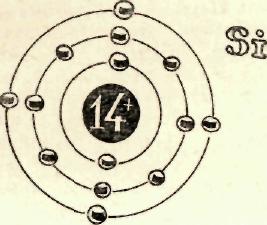
—Before speaking about the atomic structure I must say that matter consists of one or more elements. Elements are substances that cannot be divided into other substances.
— And I shall give the definition of an atom. An atom is the smallest particle of an element, which has all the properties of the element and can take part in chemical reactions.
— What particles are there in an atom?
— In each atom there is a nucleus, containing a number of protons (each proton has a positive electrical charge) and a number of neutrons, having no electrical charge. The nucleus is surrounded by a number of electrons. Each electron has a negative electrical charge. The electrons orbit around the nucleus.
— How many protons are there in the nucleus? An atom has as many — protons as it have electrons. This results in a zero electrical charge of the atom.
— Could you add anything — about electrons?
— They orbit around the nucleus in several possible orbits. These orbits are called shells. I am sure you know the structure of a silicon atom, don't you?
- Yes, I do. There are fourteen protons in the nucleus of a silicon atom. Fourteen electrons orbit around the nucleus in three orbits. The first or inner shell contains two electrons and cannot hold any more electrons. In the second shell there are eight electrons. It cannot hold additional electrons either.
In the third shell, which is farthest away from the nucleus, there are only four electrons. This outer shell can hold more electrons. I remember that the outer shell of any atom is called its valence shell.
Yes. I shall add that the number of electrons in the valence shell is known as the valency of the atom.
EXERCISES
I. Review questions:
1. What is a transistor? 2. What do transistors replace? 3. What are two most frequently used varieties of semiconductors? 4. What structure do germanium and silicon have? 5. Why is a pure germanium crystal practically called a non-conductor? 6. When do the current-conducting characteristics of the germanium crystal change? 7. What procedure is known as doping? 8. What is type germanium? 9. What is an acceptor atom? 10. What is type germanium?
II. Make up an abstract of the text basing on the answers to the above questions.
III. Translate the international words without a dictionary: situation; procedure, variety, popular, neutral, crystalline, mobile, equivalent, trivalent, real, practically, radically
IV. Translate these synonyms and memorize them:
1. free (adj), loose
2. often (adv), frequently
3. substantial (adj), essential
4. instant (n), moment
5. pair (n), couple, two
6. disrupt (v), break
7. procedure (n), process
8. create (v), build up
9. radically (adv), completely, entirely 10. variety (n), kind, change, difference
ELECTRON EMISSION
depend – зависит
carrier – носитель переносчик (энергии)
ordinary – обычный
surface – поверхность
substance - пределы
attract - притягивать
except - исключать
sufficient - достаточный
external - внешний
thermionic – термоэлектронный
The electron tube depends for its action on a stream of electrons that act as current carriers. To produce this stream of electrons a special metal electrode (cathode) is present in every tube. But at ordinary room temperatures the free electrons in the cathode cannot leave its surface because of certain restraining forces that act as a barrier. These attractive surface forces tend to keep the electrons within the cathode substance, except for a small portion that happens to have sufficient kinetic energy (energy of motion) to break through the barrier. The majority of electrons move too slowly for this to happen.
To escape from the surface of the material the electrons must perform a certain amount of work to overcome the restraining surface forces. To do this work the electrons must have sufficient energy imparted to them from some external source of energy, since their own kinetic energy is inadequate. There are four principal methods of obtaining electron emission from the surface of the material: thermionic emission, photoelectric emission, field emission and secondary emission.
Thermionic emission. It is the most important and one most commonly used in electron tubes. In this method the metal is heated, resulting in increased thermal or kinetic energy of the unbound electrons. Thus, a greater number of electrons will attain sufficient speed and energy to escape from the surface of the emitter. The number of electrons released per unit area of an emitting surface is related to the absolute temperature of the cathode and a quantity of the work an electron must perform when escaping from the emitting surface.
The thermionic emission is obtained by heating the cathode electrically. This may be produced in two ways: 1. by using the electrons emitted from the heating spiral for the conduction of. current (direct heating) or 2. by arranging the heating spiral in a nickel cylinder coated with barium oxide which emits the electrons (indirect heating). Normally, the method of indirect heating is used.
Photoelectric emission. In this process the energy of the light radiation falling upon the metal surface is transferred to the free electrons within the metal and speeds them up sufficiently to enable them to leave the surface.
Field or cold-cathode emission. The application of a strong electric field (i.e. a high positive voltage outside the cathode surface) will literally pull the electrons out of the material surface, because of the attraction of the positive field. The stronger the field, the greater the field emission from the cold emitter surface.
Secondary emission. When high-speed electrons suddenly strike a metallic surface they give up their kinetic energy to the electrons and atoms which they strike. Some of the bombarding electrons collide directly with free electrons on the metal surface and may knock them out from the surface. The electrons freed in this way are known as secondary emission electrons, since the primary electrons from some other source must be available to bombard the secondary electron-emitting surface.
EXERCISES
I. Review questions:
1. What does the action of the electron tube depend on?
2. What is present in every tube to produce the stream of electrons?
3. At what temperatures free electrons cannot leave their surface of the cathode? 4. What forces tend to keep the electrons within the cathode substance? 5. What must the electrons do to escape? 6. What must the electrons have to overcome the restraining surface forces? 7. How many methods are there for obtaining electron emission? 8. What are they? 9. What imparts the external energy to the electrons in thermionic emission? 10. What energy is used for producing free electrons in photoelectric emission? 11. What is field emission? 12. How is secondary emission obtained? 13. What emission is the most commonly used in electronics?
II. Make up an abstract of the text basing on the answers to the above questions.
III. Translate the international words without a dictionary. cathode, emitter, material, cylinder, portion, energy, radiation, temperature, thermal, adequate, absolute, special, emission, electron, normally
IV. Define to what parts of speech these words belong and translate them:
realize, equalize, electrify, classify, originate, strengthen, widen, increasingly, widely, likewise, otherwise, forward, towards, upward, outward, downward
V. Translate these antonyms and memorize them:
be present (v), be absent
primary {ad}), secondary
relative (adj), absolute
outside (adj), inside
majority (n) minority
common (adj), special
external (adj), internal
slow (adj), quick, rapid