Материал: 2076

|
automobile company in |
the |
After |
|
the |
new |
technology |
to build |
|
|||||||||||||
|
world |
|
with |
|
572 |
units |
first |
engine |
rapid |
transit |
for |
urban |
|
|||||||||
|
produced in 1899. |
|
|
|
powered bus |
commuting. In smaller cities, |
|
|||||||||||||||
|
In |
1892, |
German |
engineer |
of |
1895, |
tramways |
became |
common, |
|
||||||||||||
|
Rudolf Diesel was granted a |
models |
|
and were often the only |
|
|||||||||||||||||
|
patent for a “New Rational |
expanded |
in |
mode |
of |
public |
transport |
|
||||||||||||||
С |
|
|
|
In |
the |
1900s, |
until |
the |
introduction |
of |
|
|||||||||||
|
Combustion |
Engine”. |
|
|||||||||||||||||||
|
1897, he built the first Diesel |
leading |
to |
buses in the 1920s. |
|
|
|
|||||||||||||||
|
Engine. Steam-, electric-, |
the |
|
|
After |
|
World |
|
War |
II |
|
|||||||||||
|
and |
|
|
|
gasoline-powered |
widespread |
improvements |
in |
internal |
|
||||||||||||
и |
introduction |
combustion |
|
|
|
engine |
|
|||||||||||||||
|
vehicles |
competed |
|
for |
|
|
|
|
||||||||||||||
|
decades, |
with |
|
gasoline |
of |
|
the |
technology |
made |
diesel |
|
|||||||||||
|
internal combustion |
engines |
contemporar |
locomotives |
cheaper |
and |
|
|||||||||||||||
|
achieving dominance in |
the |
y |
|
|
more powerful. This caused |
|
|||||||||||||||
|
1910s. |
|
|
|
|
|
|
|
recognisable |
many railway companies to |
|
|||||||||||
|
Various |
|
pistonless |
|
rotary |
form |
of |
full |
initiate programs |
to |
convert |
|
||||||||||
|
engine |
|
designs |
|
have |
size |
buses |
all |
unelectrified |
|
sections |
|
||||||||||
|
attempted |
to |
compete |
with |
from |
|
the |
from |
steam |
to |
diesel |
|
||||||||||
|
the |
piston |
and crankshaft |
1950s. |
|
locomotion. |
|
the |
large- |
|
||||||||||||
|
design, but |
only |
Mazda’s |
|
|
|
Following |
|
||||||||||||||
|
|
|
|
scale |
|
construction |
of |
|
||||||||||||||
|
version of the Wankel engine |
|
|
|
|
|
||||||||||||||||
|
|
|
|
motorways after the war, rail |
|
|||||||||||||||||
|
has |
had |
more |
than |
very |
|
|
|
|
|||||||||||||
|
|
|
|
transport |
|
became |
|
less |
|
|||||||||||||
|
limited success. |
|
|
|
|
|
|
|
|
|
|
|||||||||||
|
|
|
|
|
|
|
|
popular |
for |
commuting. |
|
|||||||||||
|
|
The |
manufacturing |
of |
|
|
|
|
||||||||||||||
|
|
|
|
|
Most |
tramways |
were |
|
||||||||||||||
|
|
|
|
бА |
|
|||||||||||||||||
|
affordable automobiles on a |
|
|
|
replaced by rapid transits or |
|
||||||||||||||||
|
large |
scale was |
debuted |
by |
|
|
|
|
||||||||||||||
|
|
|
|
buses. The 1973 oil crisis led |
|
|||||||||||||||||
|
Ransom |
Olds |
|
at |
|
his |
|
|
|
|
||||||||||||
|
|
|
|
|
|
to a change of mind set, and |
|
|||||||||||||||
|
|
|
|
|
|
|
|
|
|
|
|
|
|
|
||||||||
|
Oldsmobile factory in 1902. |
|
|
|
И |
|
||||||||||||||||
|
This |
concept |
was |
greatly |
|
|
|
most tram systems that had |
|
|||||||||||||
|
Д |
1970s |
|
|||||||||||||||||||
|
expanded |
by |
Henry |
Ford, |
|
|
|
survived |
into |
the |
|
|||||||||||
|
beginning in 1914. Since the |
|
|
|
remain today. |
|
|
|
|
|
||||||||||||
|
1920s, nearly all cars have |
|
|
|
|
|
|
|
|
|
|
|
|
|||||||||
|
been mass-produced. |
|
|
|
|
|
|
|
|
|
|
|
|
|
|
|||||||
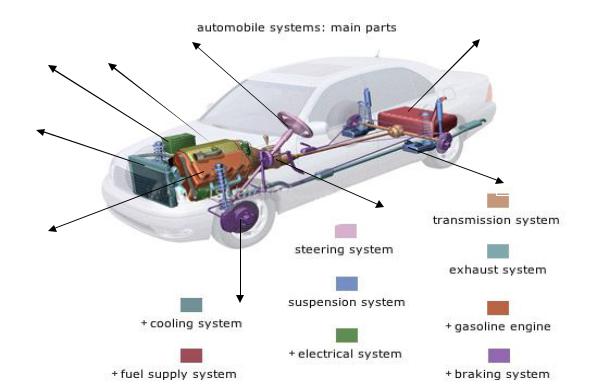
13. Look at the scheme of automobile. Match systems of the automobile and numbers in the picture. Read and translate definitions of these systems. Can you give your own definitions?
11
|
1 |
9 |
|
|
3 |
2 |
|
|
|
4 |
|
|
|
|
С |
|
|
|
|
|
8 |
|
||
|
|
|
|
|
5 |
|
7 |
|
|
|
|
|
|
|
и |
6 |
|
|
|
|
|
|
|
|
|
A vehicle is composed of basic mechanical parts and devices making |
|||
up its systems; each of them fulfills a specific function: |
||||
fuel supply system – set of components supplying the fuel to the engine. |
||||
transmission system – set of components transmitting the motion produced |
||||
by the motor to the wheels. |
Д |
|||
|
|
|||
suspension system – set of components that joins the wheels to the vehicle’s |
||||
body whileбАreducing shocks caused by the road’s unevenness and improving |
||||
the hold on the road. |
|
|
|
|
braking system – set of components that reduce the vehicle’s speed, |
||||
eventually to a halt, and keep it in place while parked. |
||||
|
|
И |
||
steering system – set of components that direct the front wheels to guide the vehicle as it moves.
gasoline engine – engine in which a mixture of air and gasoline is compressed and ignited to produce an explosion whose energy is converted into mechanical energy.
cooling system – set of components that prevents the temperature of the engine from rising excessively.
electrical system – set of components supplying the necessary current for starting the vehicle and operating its electric accessories.
exhaust system – set of components designed to expel the engine’s burned gases into the ambient air.
fuel supply system – set of components supplying the fuel to the engine
12

What systems are represented by these elements?
spark plug gasoline pump radiator
14. Skim the text and guess which of the systems mentioned above is described in the text. Complete the text with this word. Translate all the words and word collocations given in bold.
When people think of automobile performance, they normally think of
horsepower, torque and zero-to-60 acceleration. But all of the power |
|
generated by a piston engine is useless if the driver can't control the car. |
|
С |
|
That's why automobile engineers turned their attention to the …system |
|
almost as soon as they had mastered the four-stroke internal combustion |
|
engine. |
|
The job of a car … is to maximize the friction between the tires and |
|
и |
|
the road surface, to provide steering stability with good handling and to |
|
|
бА |
ensure the comfort of the passengers.
If a road were perfectly flat, with no irregularities, … wouldn't be necessary. But roads are far from flat. Even freshly paved highways have subtle imperfections that can interact with the wheels of a car. It's these
imperfections that apply forces to the wheels.
The study of the forces at work on a moving car is called vehicle dynamics, and you need to understand some of these concepts in order to appreciate why a … is necessary. Most automobile engineers consider the
dynamics of a moving car from two perspectives:
Ride - a car's ability to smooth out a bumpy road
Handling - a car's ability to safely accelerate, brake and corner
These two characteristics can be further described in three important |
|
principles - road isolation, |
Д |
road holding and cornering. The table below |
|
describes these principles and how engineers attempt to solve the challenges unique to each.
Principle |
Definition |
Goal |
Solution |
|
|
|
И |
|
|
|
|
|
Absorb energy |
|
|
The vehicle's |
Allow the vehicle |
from road |
|
|
ability to absorb |
bumps and |
|
|
Road Isolation |
or isolate road |
body to ride |
dissipate it |
|
shock from the |
undisturbed while |
without |
|
|
|
passenger |
traveling over |
causing undue |
|
|
rough roads. |
|
||
|
compartment |
oscillation in |
|
|
|
|
|
||
|
|
|
the vehicle. |
|
13

|
|
The degree to |
Keep the tires in |
Minimize the |
|
|
|
contact with the |
transfer of |
|
|
|
|
which a car |
|
||
|
|
ground, because it |
vehicle weight |
|
|
|
|
maintains contact |
|
||
|
|
is the friction |
from side to |
|
|
|
Road Holding |
with the road |
between the tires |
side and front |
|
|
surface in various |
|
|||
|
and the road that |
to back, as this |
|
||
|
|
types of |
affects a vehicle's |
transfer of |
|
|
|
directional |
|
||
|
|
ability to steer, |
weight reduces |
|
|
|
|
changes and in a |
|
||
|
|
brake and |
the tire's grip |
|
|
|
|
straight line |
accelerate. |
on the road. |
|
|
|
|
|
||
С |
|
Minimize body |
|
|
|
|
roll, which occurs |
Transfer the |
|
||
|
|
|
as centrifugal |
weight of the |
|
|
|
|
force pushes |
|
|
|
|
|
car during |
|
|
|
|
The ability of a |
outward on a car's |
|
|
|
Cornering |
vehicle to travel a |
center of gravity |
cornering from |
|
и |
curved path |
while cornering, |
the high side |
|
|
|
|
|
raising one side of |
of the vehicle |
|
|
|
|
to the low |
|
|
|
|
|
the vehicle and |
side. |
|
|
|
|
lowering the |
|
|
|
|
|
opposite side. |
|
|
A car's …, with its various components, provides all of the solutions |
|||||
|
бА |
|
|
||
1.What are the main functions ofДsuspension system?
2.What does vehicle dynamics study?
3.What are three main principles which canИdescribe the dynamics of a moving car?
4.According to which of the principles the energy absorbing from road bumps can be dissipated without causing undue oscillation in the vehicle?described.
during braking. Because the nose of the car dips toward the road, this type of motion is known as "dive." The opposite effect -- "squat" -- occurs during acceleration, which shifts the weight of the car from the front tires to the back.
14
16. Put the following types of propulsion into the chronological order:
1. electric-powered;
2. horse-drawn;
3. gasoline-powered;
4. steam-powered.
С17. Find as many cognate words (nouns, adjectives, verbs) as possible for the following words:
to transport, to propel, electric, power, fuel.
и18. Fill in the gaps using some of these cognate words:
Most work in alternative … concepts is focused on replacing traditional internal combustion engines in automobiles. The motivation for the research is primarilyбАto achieve more sustainable methods of … than those relying on fossil fuels. To be competitive alternative fuel vehicles must be … and highspeed enough; its source of energy must provide enough range and be easily refueled/recharged. Hybrid vehicles use petroleum and another source, generally …. Petrofree cars are not … by petroleum, for example, battery electric cars, hydrogen vehicles, compressed air.
19. Skim the text and list main types of internal combustion engine’s classifications are mentioned inДthe text. Read the text paying attention to the new terms for you. Write out and translate them.
Today we will discuss about engine and types of engine used in automobile. Any device which can convert heat energy of fuel into mechanical energy is known as engine or heat engine. Engine is widely used in automobile industries or we can say thatИengine is the heart of an automobile. Basically engine may be classified into two types.
Types of Engine:
1. External combustion (E.C.) Engine
It is an engine in which combustion of fuel take place outside of the engine. In this type of engine heat, which is generated by burning of fuel is use to convert the water or other low boiling temperature fluid into steam. This high pressure steam used to rotate a turbine. In this engine we can use all solid, liquid and gases fuel. These engines are generally used in driving locomotive, ships, generation of electric power etc.
Advantages of E.C. engine. In these engines starting torque is generally high. Because of external combustion we can use cheaper fuels as well as solid fuel. They are more flexible compare to internal combustion engines.
15