Материал: voronina_ev_sotsialnokulturnaia_sfera_obshcheniia

available (employment, healthcare and education). 5)
_________________
The UN World habitat day (4th October) this year looks at this issue. It emphasises the need for strong links
between town and countryside, and their mutual dependence upon each other.
Are you a town mouse or a country mouse?
After-reading activities
5.d Below are 10 sentences from the text, but the words are in the wrong order and the punctuation is missing. Can you put the words in the correct order and put in the punctuation?
1. |
civilised mouse town the city life |
6. large very modern have cities |
|
thought was |
populations |
2. |
peace quiet the and country |
7. to are live slums places overcrowded |
|
missed mouse |
th |
|
8. in 18 moved to countryside people |
|
3. |
Maria’s a busy house overlooks |
city the from century |
|
street city |
9. Internet in information the people to |
4. |
the shopping weekends goes to |
provides local areas |
|
Maria mall at |
10. the is world un in October day |
5. |
reading of the Alex enjoys front |
habitat |
|
in fire |
|
5.e Work with your partner to prepare a list of pros and cons of living in the city and in the country. Discuss this problem together to choose the most suitable for each of you. Support your position with the arguments from your list.
Living in the city |
Living in the country |
||
PROS |
CONS |
PROS |
CONS |
1. |
1. |
1. |
1. |
2. |
2. |
2. |
2. |
etc. |
etc. |
etc. |
etc. |
6. Extra Activities: Life in an English village
6.a How do you imagine a traditional English village? In pairs make some predictions.
6.b Read the text and check if your guesses were right.
6.c While reading chose the best word or phrase from the list below to fill in the gaps
16
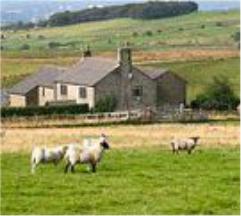
Fitting into village life
How to settle seamlessly into the rural English village community, from the international family's viewpoint.
Once a celebrated radio presenter in Shanghai, Maggie Zhang spoke to me about her experiences. She and her Scottish husband 1)______ a village near York in North Yorkshire shortly after their marriage. Five years later and still in the same village, she reflects on how she and her expanded family, they now have two children, find village life.
“Village life is wonderful for the kids,” says Maggie. “There is a great sense of 2) ____ here. Shanghai is all about money, money, money. Here it is more 3) ____ and you can't tell who has money and who hasn't.”
For Maggie, 4) ____ local people hasn’t been a problem. The post office has been the main place of contact and 5) ____ often greet her in the street. Through motherhood, attending post-natal classes and now as her children go to nursery she finds herself increasingly 6) _____
with the community, meeting new people and invited to children’s parties.
7) _____ of Maggie’s village are hardly multi-cultural, yet in her view seem easy going. Maggie hinted that even if local people are curious about her 8) _____ , so far no one has said anything.
“English people don't ask direct questions, unlike Chinese, English people ‘go around the moon to meet the sun.’"
Children, however, are much more 9) _____ and like any mother
her greatest worry is her children’s future and how they will 10) _____at school.
Five months ago, Claudia, a lawyer, and her British husband moved from Puerto Rico to a new housing 11) _____ within a village in Derbyshire to 12) ____ their daughter of two years.
13) _____ past experiences as an expatriate working in East Asia, the transition to England for Claudia has been made more difficult 14) ____
the isolation she feels through living in the country-side. “In a city it is easier to feel less like a 15) ____ than in rural areas.” she says, despite the 16) ____ of a rural village being “cheaper”.
For internationals 17) ____ city life, living in an English country village presents its own challenges. 18) ____, there aren’t so many facilities as in a city and transport links aren’t so well-developed. It can also be harder to find 19) ____
communities of internationals. For some expats it may be best to 20) ___
a village near a major city to
17
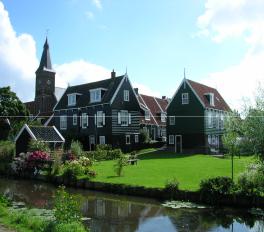
experience the best of both worlds. Country Life counsels people to take the advice of estate 21) ____ on choosing the right place to live and
identify the “five Ps: a pub, public transport, 22) ____ church, primary school and post office.”
1 |
A |
visit |
B |
have been to |
C |
moved to |
2 |
A |
people |
B |
community |
C |
humour |
3 |
A |
boring |
B |
relaxed |
C |
funny |
4 |
A |
getting to know |
B |
to know |
C |
meet |
5 |
A |
neighbours |
B |
relations |
C |
managers |
6 |
A |
experienced |
B |
worried |
C |
involved |
7 |
A |
The authorities |
B |
The residents |
C |
The citizens |
8 |
A |
background |
B |
future |
C |
decision |
9 |
A |
shy |
B |
jealous |
C |
direct |
10 |
A |
get off |
B |
get along |
C |
get up |
11 |
A |
place |
B |
area |
C |
estate |
12 |
A |
bring up |
B |
bring along |
C |
bring about |
13 |
A |
Despite |
B |
In spite |
C |
Although |
14 |
A |
because |
B |
because of |
C |
that’s why |
15 |
A |
waiter |
B |
guest worker |
C |
foreigner |
16 |
A |
income |
B |
truth |
C |
advantage |
17 |
A |
used to |
B |
are used to |
C |
using |
18 |
A |
For instance |
B On the other hand |
C |
Moreover |
|
19 |
A |
hostile |
B |
like-minded |
C |
remote |
20 |
A |
selective |
B |
selecting |
C |
select |
21 |
A |
agents |
B |
assistants |
C |
officials |
22 |
A |
parish |
B |
public |
C |
private |
6.c Work in groups and read the ten tips for surviving in an English village . Think of your top ten tips for surviving in a Russian village.
Top tips for surviving in an
English village
Maggie and Claudia's suggestions for making a success of life in the English village are:
• Improve your language skills.
• Make an effort to be part of the community.
• Listen to the radio and read the news to stimulate conversation.
18

•Encourage your children to make local friends.
•Try to explore different places at weekends.
•“Recharge your batteries” by going to London every now and then to experience what a city has to offer
over a country village.
• Learn about gardening! English village communities love their gardens, so having a nice garden is a matter of pride and a good talking point!
7. Writing
7.a Look at the Toronto City Fact file for tourists. Match these headings with the correct section 1-5 of the factfile.
General description. |
Location. |
Tourist attractions. Size. |
Climate. |
||||
1. |
|
|
. |
City Factfile: Toronto |
|
||
|
|
|
|
|
|||
|
Toronto is in |
the southeast of Canada, in Ontario. It is on the lake Ontario. |
|||||
2. |
|
. |
Toronto is warm (250C) and in the winter it is |
|
|||
In |
the |
summer |
|
very cold |
|||
(-100C). |
|
|
|
||||
3. |
|
. |
|
|
|
||
|
|
|
|
||||
Toronto is a big city. The population is 2.5 million. |
|
||||||
4. |
|
. |
|
|
|
||
|
Toronto is a |
modern and busy city. There is a beautiful harbour. There are a lot |
|||||
of museums, theatres and restaurants. |
|
||||||
5. |
|
. |
|
|
|
||
|
|
|
|
|
|
|
|
Chinatown – there are a lot of restaurants and Chinese shops here.
The CN Tower – there is a restaurant and a theatre at the top of the tower. The views are wonderful.
Niagara Falls – this beautiful tourist centre is 160km from Toronto.
7.b Adjectives make descriptions interesting. Write an adjective from the box next to the correct description.
|
|
busy |
beautiful |
wonderful |
modern |
warm |
|||
|
|
|
|
|
|
|
|||
1 |
It isn’t hot, it isn’t cold. |
|
It’s |
|
|
. |
|
||
2 |
It’s new. |
|
|
It’s |
. |
|
|||
3 |
It’s full of people, cars and noise. |
It’s |
|
|
. |
|
|||
4 |
It isn’t ugly. |
|
It’s |
|
|
. |
|
||
5 |
It’s very good. |
|
It’s |
|
|
. |
|
||
7.c
Write a factfile for your city or a city you’d like to live in (100-150 words).
19

Unit 2
Wildlife
In this module you will:
Read about animal invaders
Role-play a conversation
Practise using much, many, little, a little, few; degrees of comparison
Listen to a telephone discussion
Write a project
Learn how to describe pictures
Useful vocabulary:
Nouns |
neighborhood, extinction, invader, damage, rescue worker, welfare, |
|
ban, decline, moratorium, harpoon, delicacy, whaling fleet, |
Verbs |
sabotage, variety, wildlife, a prohibition |
to escape, to decrease, to increase, to destroy |
|
Adjectives |
extinct, experienced |
Phrases and |
a front for something, to hunt for something |
collocations |
|
20