Материал: part07

Page 26 |
DICOM PS3.7 2020a - Message Exchange |
- Standard -

DICOM PS3.7 2020a - Message Exchange |
Page 27 |
5 Conventions
The following conventions are used for the service description tables shown in this Part of the Standard.
(=) The value of the parameter is equal to the value of the parameter in the column to the left.
- Not applicable. The parameter shall not be present.
C The parameter is conditional. The condition(s) are defined by the text that describes the parameter.
M Mandatory usage
MF Mandatory with a fixed value
U The use of this parameter is a DIMSE Service User option
UF User Option with a fixed value
- Standard -

Page 28 |
DICOM PS3.7 2020a - Message Exchange |
- Standard -

DICOM PS3.7 2020a - Message Exchange |
Page 29 |
6 Service Context
ThissectiondefinestheDICOMMessageServiceElementandProtocolwithinthecontextoftheDICOMApplicationEntity.Specifically, this section provides a model to clarify a number of concepts for digital imaging and communications and introduces key terms used throughout the Standard. This model has been used to partition the Application Layer of the DICOM Standard into separate parts.
6.1 DICOM Communication Model for Message Exchange
Figure 5-1 in PS3.1 presents the general communication model of the DICOM Standard, which spans both network (on-line) and storage media interchange (off-line) communications. Application Entities may utilize any of the following transport mechanisms:
•the DICOM Message Service and Upper Layer Service, which provides independence from specific physical networking commu- nication support and protocols such as TCP/IP,
•the DICOM Web Service API and HTTP Service, which allows use of common hypertext and associated protocols for transport of DICOM services, or
•theBasicDICOMFileService,whichprovidesaccesstoStorageMediaindependentlyfromspecificphysicalmediastorageformats and file structures.
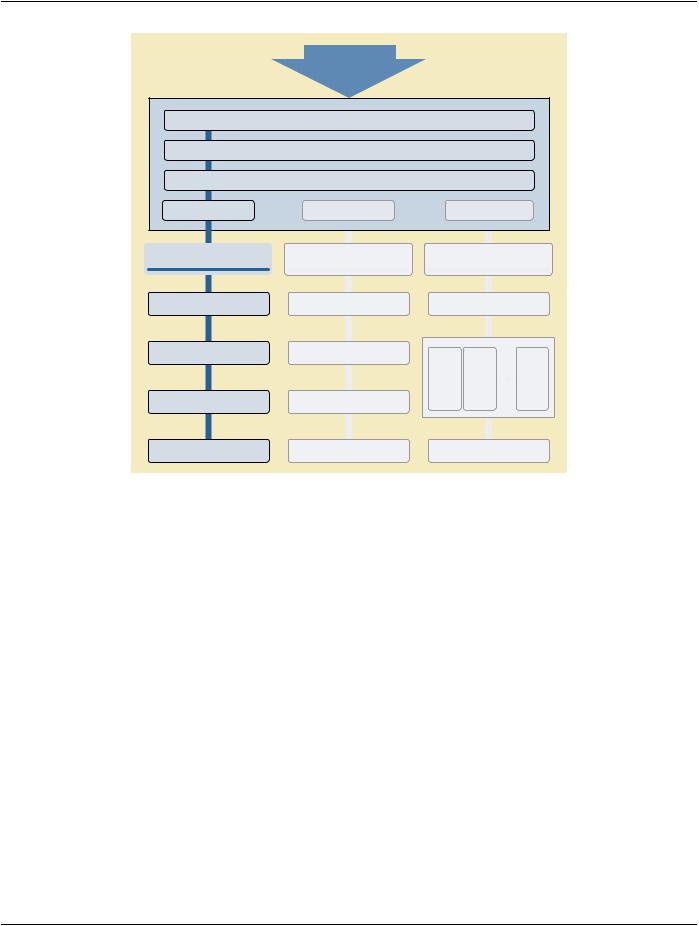
PS3.7 focuses on the DICOM Message Service and here the OSI Basic Reference Model is used to model the interconnection of medical imaging equipment. As shown in Figure 6.1-1 several layers of communication protocols are distinguished. DICOM uses the OSI Upper Layer Service to separate the exchange of DICOM Messages at the Application Layer from the communication support provided by the lower layers.
This OSI Upper Layer Service boundary allows peer Application Entities to establish Associations, transfer Messages and terminate Associations.Forthisboundary,DICOMhasadoptedtheOSIStandards(PresentationServiceaugmentedbytheAssociationControl Service Element). It is a simple service that isolates the DICOM Application Layer from the specific stack of protocols used in the communication support layers.
The DICOM Upper Layer protocol augments TCP/IP. It combines the OSI upper layer protocols into a simple-to-implement single protocol while providing the same services and functions offered by the OSI stack.
The DICOM Upper Layer Service is defined in PS3.8.
- Standard -
Page 30 |
DICOM PS3.7 2020a - Message Exchange |
Medical Images and related information
DICOM Application Entity
Service Class Specifications
Information Objects Definitions
Dataset Structure and Encoding - Data Dictionary
Message Exchange
BOUNDARY:
DICOM Upper Layer Service
DICOM Upper Layer
Security Layer
(Optional)
TCP/IP Transport Layer
Network Exchange
On-Line Communication
Figure 6.1-1. DICOM Communication Model for Message Exchange
6.2 The DICOM Application Layer Structure
A DICOM Application Entity and the Service Elements it includes are shown in Figure 6.2-1.
Note
Annexes of this Part define certain aspects of the DICOM Application Entity.
The heart of any DICOM Application Entity is specified by the following parts of the DICOM Standard:
•PS3.3, Information Object Definitions, which provides data models and Attributes used as a basis for defining SOP Instances that are operated upon by the services defined in this [art. Such SOP Instances are used to represent real-world occurrences of images, studies, patients, etc.
•PS3.4, Service Class Specifications, which defines the set of operations that can be performed on SOP Instances. Such operations may include the storage, retrieval of information, printing, etc.
•PS3.5, Data Structure and Encoding, which addresses the encoding of the Data Sets exchanged to accomplish the above services
•PS3.6, Data Dictionary, which contains the registry of DICOM Data Elements used to represent Attributes of SOP Classes
The DICOM Application Entity uses the Association and Presentation data services of the OSI Upper Layer Service defined in PS3.8. The Association Control Service Element (ACSE) augments the Presentation Layer Service with Association establishment and ter- mination services. In the case of TCP/IP, the full equivalent of ACSE is provided by the DICOM Upper Layer Service. For the DICOM point-to-point stack, a minimum subset of ACSE is provided by the Session/Transport/Network Service.
- Standard -