Материал: voronina_ev_sotsialnokulturnaia_sfera_obshcheniia

3.g Look at the web page (ex. 4.a) and find an example of be able to that completes this phrase:
…in the future, even more Europeans it.
3.i Look at two columns below. In which column is it possible to use can or be able to after the words?
Finish the sentences using your own ideas.
My brother |
|
I want to |
|
. |
|
|
. |
I |
|
One day I will |
|
. |
|
|
. |
A lot of people |
He might |
||
. |
|
|
. |
Not many English |
I’d like to |
||
people |
. |
. |
|
|
|
|
|
3.j Complete these sentences using can, can’t where possible or (not) be able to.
1 |
I always learn a few words of the |
||||||
language when I go abroad. |
|
|
|||||
It’s nice to |
|
speak to local |
|||||
people. |
|
|
|
|
|
|
|
2 |
I’m sorry, can you please repeat |
||||||
that? It’s very noisy and I |
|
hear you. |
|||||
3 |
I’m going to take extra |
French |
|||||
Lessons because I want to |
|
|
speak |
||||
to people when I’m on holiday. |
|||||||
4 |
It’s great using the Internet. |
||||||
You learn a lot of new
expressions.
5 If you go to Australia for two years, you’ll speak English
really well by the time you come back.
6Why don’t you ask your teacher to recommend a book? She may
help you.
7I’m very sorry, but I’m afraid that I come to the lesson next week.
8People who work in the tourist
industry usually need to |
|
speak |
more than just one language.
3.k Write a list of five things that you can’t do at the moment but you will / might be able to do in the future. Use the ideas to help you. Find out what your partners think they will be able to do in the future.
Example
I can’t drive a car but I might be able to when I’m older.
read a novel in English / finish the coursebook
explain the difference between allow, let and permit / read TRENDS section
graduate from university / I am 2022
visit the moon / technology becomes cheaper
4. Speaking
4.a What questions would you ask about the English language?
Here are the most frequently asked ones. Match the questions with the answers from the webpage below:
|
Why do people learn English? |
|
How many people speak English? |
|
What’s the longest word in |
|
How many words are there in |
|
English? |
|
English? |
96
What’s the most common letter in |
Where does English come from? |
English? |
|
1
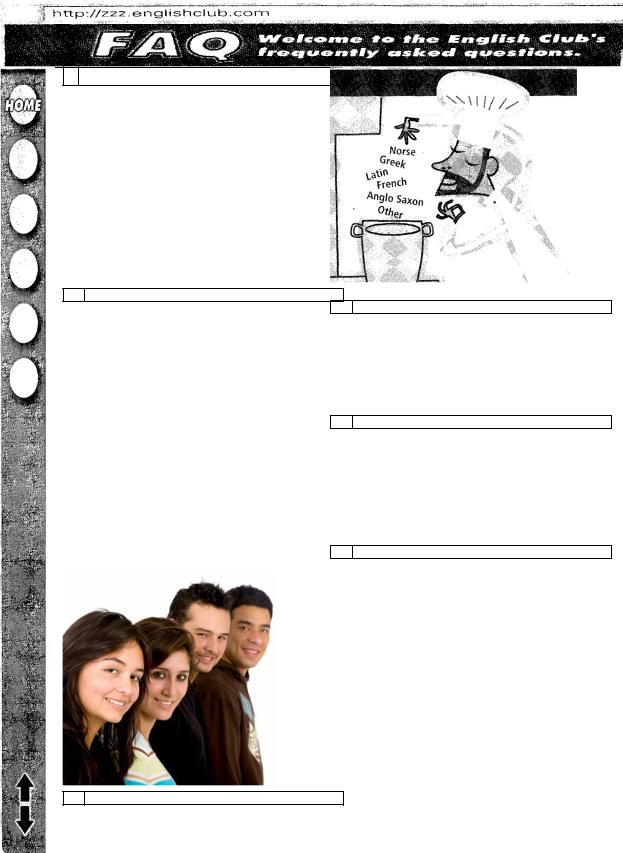
We can't answer that question exactly, but here's a recipe we came across the
other day. |
|
50 grammes |
Greek |
75 grammes |
Latin |
400 grammes |
Anglo Saxon |
150 grammes |
Norse |
300 grammes |
French (flavoured with |
Latin and Greek) |
|
25 grammes other mixed languages Mix all the ingredients together. Cook slowly for 1,000 years
2
English is the main language in 30 countries, and there are about 375 million people who speak it as their first language. It is also used as an official language in over 70 other countries such as Cameroon, Tanzania, India, Pakistan, Malaysia and Fiji, and is a second language for about 350 million people. One in two Europeans can speak English quite well and can have a proper conversation, and in the future even more Europeans will be able to speak it. All in all, there are about 1,000 million (a billion) people who can't speak English, but they're learning it!
3
There are about 300,000 entries in the Oxford English Dictionary. However, there are many scientific and technical words that are not in the dictionary (for example, there are over a million types of insect). An educated English speaker only uses about 30,000 words.
4
According to the Oxford English Dictionary, it is the name for a lung disease caused by breathing in dangerous dust and is pneumonoultramicroscopicsilicovolcanoconios is
5
The letter 'e' is used more than any other. Ernest Wright was very interested in this fact, and wanted to see if it was possible to communicate without using this letter at all.
He wasn't able to write very much! In the end, he wrote a 200-page novel, Gadsby, without using any words containing the| letter 'e'. Sadly, it was not a great success, but here is a bit of it:
A glorious full moon sails across a sky without a cloud. A crisp night air has folks turning up coat collars and kids hopping up and down for warmth.
6
It's the top language for travel and tourism, and is used in business and science. At the moment, 80 per cent of the world's Internet sites are in English, but this will fall when more countries start using their own language.
97

4.b With your partner discuss the following points:
where the Russian language comes from
how many people speak/learn Russian
why people abroad learn Russian
what is the most frequently used letter in Russian
4.c Work in groups. Write a sentence (as long as possible) without any words containing the letter ‘e’. Students whose sentence is the longest are the winners. Make a list of the words containing more than ten letters.
4.d. Tell the class about Russian or any other language you know about. You can use FAQs from the webpage as a plan.
5. Listening
4.a Work with a partner to discuss the following.
What languages are spoken in Scotland?
What can you do to prevent a language from disappearing?
4.b Listen to a radio interview with Bradana MacKinnon, spokesperson for the Society for the Promotion of Gaelic. Tick the things that are mentioned.
1statistics about people speaking Gaelic
2the differences between Gaelic
in Scotland and Ireland
3the economy of the Gaelic-speaking Community
4investment in cultural events
and festivals of Gaelic arts 5 training teachers of Gaelic
4.c Listen again and choose the
correct word for each space. |
|
||||
1 It’s a Gaelic word meaning |
. |
||||
a ‘sea’ |
b ‘salmon’ |
c |
‘Celtic’ |
|
|
2 Should we fight to keep a dying |
|
||||
language |
|
, even if few people will |
|||
ever use it or hear it? |
|
|
|
||
a alive |
b spoken |
c life |
|
||
3 In the last 100 years or so, the number of Gaelic-only speakers in
Scotland |
has fallen |
from nearly |
to zero. |
|
|
a 4,400 |
b 44,000 |
c 34,000 |
4 It’s also true to say that since there has been a revival in the Celtic culture and language.
a the 1960s b the 1930s c the 1960s
5 There has been a huge in the
number of young children being educated in Gaelic in primary schools and nurseries.
a decrease b drop c increase
6 At the moment we’re trying to raise our profile and we have a new fund-
raising |
|
. |
|
|
|
a |
program |
b campaign |
|
c |
|
company |
|
|
|
||
7 |
Every language, like every |
|
of |
||
animal, is unique and worth protecting. |
|
|
a species |
b spices |
c |
spaces |
|
|
98

4.d Tell about your opinion on the problem of dying languages.
6. Extra Activities: Texting.
Vocabulary: allow, permit, let
6.a Compare the dictionary definitions and answer the questions below.
Allow - to give someone |
|
Permit |
- |
|
to |
allow |
Let - to allow something |
|||||||
permission to do or have |
|
someone |
|
to |
|
do |
to happen. |
|||||||
something: |
I’m |
sorry, |
|
something, |
or |
to |
allow |
Let someone/something |
||||||
sir, but smoking is not |
|
something |
|
to |
happen: |
do something: Alice’s |
||||||||
allowed. |
|
|
|
|
The use of mobile phones |
mum won’t let her come |
||||||||
Allow someone to do |
|
is not |
permitted |
inside |
with us. |
|||||||||
something: |
She |
only |
|
the aircraft. |
|
|
|
|
|
Let something |
||||
allows |
the |
children to |
|
Permit |
someone |
to |
do |
in/out/through etc: |
||||||
watch |
television |
at |
|
something: We were not |
Open the windows and |
|||||||||
weekends. |
|
|
|
|
permitted |
to |
enter |
the |
let some fresh air into |
|||||
Allow |
|
someone |
|
area |
during |
|
the |
the room. |
||||||
something: |
|
|
Some |
|
investigation. |
|
|
|
|
Let someone know (=tell |
||||
prisoners |
are |
allowed |
|
Permit |
|
|
|
someone |
someone): Let us know |
|||||
visitors. Allow |
yourself |
|
something: |
|
|
|
She |
|
what time you want us |
|||||
something: I’m on a diet |
|
permitted |
|
herself |
a |
to be there. |
||||||||
but I allow myself an |
|
single bar of chocolate a |
Let yourself: She lets |
|||||||||||
occasional piece of cake. |
|
week. |
|
|
|
|
|
|
|
herself be talked into all |
||||
|
|
|
|
|
|
|
|
|
|
|
|
|
|
kinds of schemes. |
1Which is the most formal of the words? Which is the most informal?
2Which of the following sentences is/are incorrect?
a)The visa permits you to study for two months.
b)My father would never allow me to study English.
c)Let me to go. You’re hurting me.
6.b Text messages use a large number of abbreviations to save time and space. Words are shortened, often by leaving out vowels. Letters and numbers are used instead of words (or parts of words) that sound the same. Guess what the following abbreviations mean.
C u l8er
R u cumin 2day? Tx 4 a gr8 party RUOK?
Got ur msg
2 bsy atm, tlk l8er Just 2 let u no Need mo infmtn Will u b hr Thu eve?
99
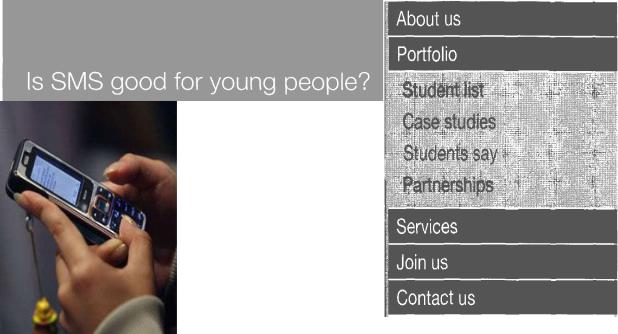
Does SMS seriously
1) ________ young people's ability to write good English?
Recently, a Scottish teenager 2)________ her entire English exam in text language. Should she be allowed to do that?
SMS is 3) _______the increase but is it sending the right message to young people and teachers? Some teachers believe that SMS
is having a negative effect 4) _______ young people's literacy skills.
They say that texting is preventing young people from 5) _________properly. Because texting is fast and users have to be brief, good grammar, spelling and sentence structure is forgotten.6) _________, young SMS users are not able to write correct English.
Other teachers, 7) ________, say that young people should be permitted to express themselves and that texting is just a modern means of communication. Teachers who want to ban it are 'old-fashioned'. One educational expert commented: 'Children need to learn to 8) __________ in a range of ways.'
A lot of teachers and lecturers refer to the story of the teenager who wrote an entire English essay in text language. Her essay started: 'My summr hols wr CWOT. B4, we used 2go2 NY 2C my bro. ILNY, it's a gr8 pic' The translation of this is: 'My summer holidays were a complete waste of time. Before, we used to go to New York to see my brother. I love New York. It's a great place.'
100
Text language should only be used for texting! (That's why it's called TEXT language.)
We'll never get a good education if we keep using text language instead of correct English.
Lucy, 17, Oxford
I don't think that students should be 9) _______text because it will create problems for the teachers. Most of them simply don't understand text language.
Chris, 18, Leeds
No way! I think it's OK for emails and texts, but NOT for schoolwork, because it will affect your spelling when you're older.
Jordan, 16, London