Материал: voronina_ev_sotsialnokulturnaia_sfera_obshcheniia

Unit 8
Languages and Communication
In this module you will:
Read about fate of languages
Talk about your native language, ways of learning languages
Test your knowledge about world languages
Practise using modals (ca n, be able to) and their equivalents
Listen to an interview
Write a letter to a friend
Learn how to write SMS in English
Useful vocabulary:
Nouns |
community, effect on smth, texting |
Verbs |
to disappear, to save, to survive, to destroy, to care, to say, to talk, |
|
to speak, to tell, to study, to revise, to practise, to improve, to |
|
socialize, to communicate, to prevent from, to decipher, to affect, |
|
to express oneself |
Adjectives |
rare, unique, old-fashioned, close to |
Phrases and |
native speakers, spoken language, first language, official |
collocations |
language, to have a proper conversation, correct English, means of |
|
communication, |
Linkers |
because of, all in all, according to, reason why |
91

1. Lead-in
1.a Do you know what languages the people in these countries speak? Choose from the table on the right.
1 official |
2 or more official |
language |
languages |
France→ |
Canada→ |
China→ |
Switzerland→ |
Portugal→ |
Belgium→ |
Spain→ |
India→ |
Australia→ |
Belarus→ |
French Chinese Portuguese
Spanish Hindi English
Italian Russian German
Flemish(Dutch) Hungarian
Belarussian Japanese Ukrainian
Bengali Arabic
1.c. How much do you know about the world’s major languages? Try the quiz below.
Test your knowledge
1.Approximately how many languages are there in the world? a 6,500 b 16,500 c 1,500
2.Order the world’s top 5 languages according to the number of native speakers.
|
|
Chinese |
English |
Spanish |
Japanese |
Bengali |
|
|
Russian |
Hindi |
Arabic |
Portuguese |
German |
3. |
How many people speak English as a first, second or third language? |
|||||
|
a 0.5 billion b 2 billion |
c 1.5 billion |
|
|||
4. |
How much of the world’s e-mail is written in English? |
|
||||
|
a 60% |
b 70% |
c 80% |
|
|
|
5. |
How many Languages disappear every year? |
|
||||
|
a 5 b 20 |
c 15 |
|
|
|
|
2. Reading
Pre-reading activities
2.a Look at the picture in the text below and guess who the person might be. Look at the key words below and guess the topic of the text.
lonely(adj) die (v) language (n) disappear (v) speaker (n) save (v) rare (adj)
While-reading activities
2.b Read the article and match the topic a-f with paragraphs 1-6.
a |
What communities can do |
|
. |
|
|
|
|
|
|
|
|
|
b |
The number of languages in danger |
|
. |
|
|
|
||||||
c |
The last speaker of his language |
|
|
|
. |
|
|
|
|
|
|
|
d |
The most important reason why |
languages are dying |
. |
|||||||||
e |
Languages and natural disasters |
|
|
. |
|
|
|
|
||||
f |
What happens when languages |
die |
|
. |
|
|
|
|||||
92
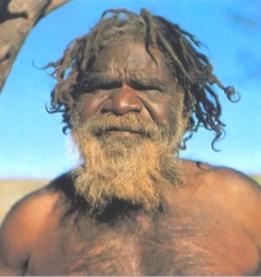
1 Maluerindi (a name which means 'Running Water') is lonely because he has nobody to talk to, but his loneliness won't change - he is the last person in the world who can speak his Aboriginal language. 'It's sad,' he says, 'but there's nothing we can d o about it now.'
2 Experts who study languages say that there are 51 other languages with just one speaker left - 28 of them in Australia. These languages are so close to dying that nobody can save them. The experts tell us that out of the world's 6,000 languages, 3,000 will disappear in the next 100 years.
3 There are many reasons why languages die. Sometimes natural disasters such as earthquakes, floods or hurricanes suddenly destroy small groups of people who live in far away places. Sometimes the weather changes and there isn't enough food, and sometimes strangers bring new diseases.
4 But disasters like these are not the biggest danger, and do not tell us why languages are disappearing faster than ever before. The real problem comes from the big world languages such as English, Spanish, Portuguese and French. Today, mainly because of America, English is the first world language, and it is very hard for smaller languages to survive.
5 There are things that small communities can do to save a language, but they need time and money. First, people need to record the language and write it down. Then they need to train teachers, and write grammar books, dictionaries and books for schools.
6 We should care about languages that are in danger just as we should care about rare plants and animals. When a language dies it is not like when a civilization such as the ancient Greeks or Egyptians die. They leave behind buildings like the pyramids in Egypt and Parthenon in Greece - there is always something to show that they were there. But a spoken language leaves nothing behind - when it dies, there is only silence.
Post-reading activities
2.c Read the article again and answer these questions using your own words.
1What does Maluerindi think we can do about his loneliness?
2What is going to happen in the next 100 years?
3Why do languages die?
4What can people do to save a language?
5Why should we care when languages die?
93

3. Language skills
|
|
|
|
|
Vocabulary |
|
|
|
|
|
|
|
||
3.a Find these verbs in the article |
3 ‘It’s said,’ he |
|
|
|
, ‘but there’s |
|||||||||
and match them to their meanings |
nothing we can do about it |
now.’ |
||||||||||||
in this context. |
|
|
|
|
4 The experts |
|
|
us that out of |
||||||
1 |
change |
damage something |
the world’s 6,000 languages, 3,000 will |
|||||||||||
badly |
|
|
|
|
disappear in the next 100 years. |
|||||||||
2 |
disappear |
stop existing |
|
|
Which word means to know a |
|||||||||
3 |
destroy |
live after a difficult |
language? |
|
|
|
|
|||||||
event |
|
|
|
|
Which word means to have a |
|||||||||
4 |
survive |
stop something dying |
conversation with? |
|||||||||||
5 |
save |
|
be interested in |
Which word means to give |
||||||||||
something |
|
|
|
|
information to someone? |
|||||||||
6 |
care |
become different |
|
|
Which word is used to describe |
|||||||||
Choose three of the verbs and write |
someone’s actual words? |
|||||||||||||
three sentences about the problem |
|
|
|
|
|
|
|
|
||||||
of dying languages. |
|
|
3.c Fill in the missing words. |
|||||||||||
3.b Complete these sentences with |
Verbs |
|
|
|
Nouns |
|
||||||||
study→ |
student |
|
||||||||||||
the correct form of say, talk, speak |
revise→ |
|
|
|
|
|
|
|
||||||
or tell. |
|
|
|
|
practise→ |
|
|
|
|
|
|
|
||
|
|
|
|
|
|
|
←repetition |
|
||||||
1 |
He is lonely because he has nobody |
|
|
|||||||||||
|
←memory |
|
||||||||||||
to |
|
to. |
|
|
|
|
|
|
||||||
|
|
|
|
|
|
←translation |
|
|||||||
2 |
He is the last and only person in |
|
|
|||||||||||
|
|
|
|
|
|
|
|
|||||||
Australia who can |
|
his |
|
|
|
|
|
|
|
|
||||
Aboriginal language. |
|
|
|
|
|
|
|
|
|
|
|
|||
3.d Complete the following sentences. Use the words in the box if you like.
1 |
|
|
|
|
|
2 |
|
|
|
|
|
|
3 |
|
|
|
|
|
|
|
‘For me, learning English |
In general, I want to: |
In particular, I need |
||||||||||||||||||
is |
|
|
.’ |
|
|
|
|
|
|
|
|
|
English for: |
|||||||
|
|
|
|
|
|
|
|
|
|
|
|
|
|
|
|
|
|
|
|
|
|
|
|
|
|
|
|
learn |
write |
read |
|
|
|
taking writing giving |
|||||||
|
|
a pleasure |
a |
|
|
|
||||||||||||||
|
|
|
improve feel |
make |
|
|
|
|
socialising travelling |
|
||||||||||
|
|
nightmare |
an |
|
|
|
|
|
|
|||||||||||
|
|
a |
|
more confident |
g |
|
on business and |
|||||||||||||
|
|
opportunity |
a pain |
|
||||||||||||||||
|
|
|
|
|
|
|
|
|
|
|
|
|
|
|
|
|
||||
|
|
when I speak. |
|
|
holidays. |
|||||||||||||||
|
|
an investment |
a |
|
|
|||||||||||||||
|
|
b |
|
|
my |
listening |
H |
|
|
|
e-mails, letters |
|||||||||
|
necessity |
an effort |
|
|
|
|
|
|||||||||||||
|
|
|
|
|
|
|||||||||||||||
|
a problem |
a hobby |
skills. |
|
|
|
|
|
and faxes. |
|||||||||||
|
|
|
|
|
|
c |
|
|
lots of new |
i |
|
with friends and |
||||||||
|
|
|
|
|
|
|||||||||||||||
|
|
|
|
|
|
|
vocabulary. |
|
|
|
|
colleagues. |
|
|
||||||
|
|
|
|
|
|
d |
|
fewer |
grammar |
j |
|
|
|
part in |
||||||
|
|
|
|
|
|
|
|
|
|
|
|
|
|
|
|
|
|
|
|
|
94
mistakes. |
conferences. |
||||||
e |
|
|
|
better, clearer |
k |
|
short |
|
English. |
|
|
presentations. |
|||
f |
|
|
without using a |
|
|
|
|
|
dictionary |
so much. |
|
|
|
||
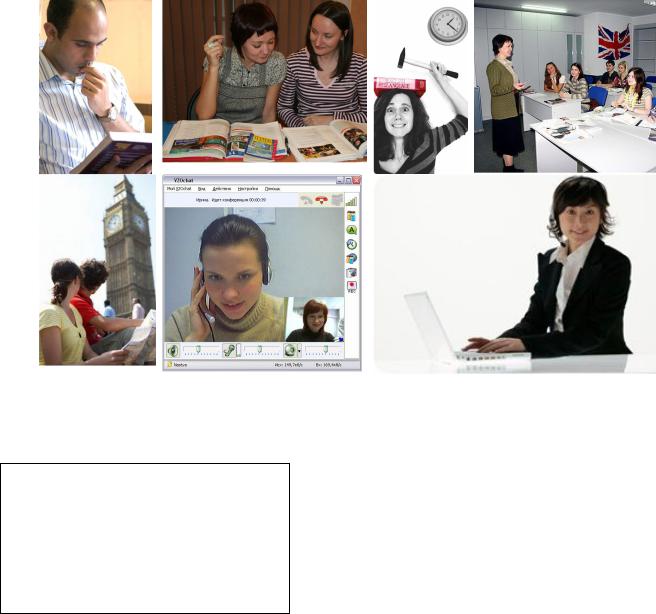
3.e These pictures show different ways of learning a language. In pairs discuss what they show.
decide together which ways are the most helpful for learning a language
say which activities you do, or would like to do
ask about your partner’s experience
discuss your reasons for learning a language
Grammar
Modals: can, can’t or (not) be able to
1We use can and can’t to refer to things we are (not) able to do.
2Sometimes it is not possible to use can because it has no infinitive form and no future form. We have to use
be able to instead.
3.f Look at the extracts from the web page (ex. 4.a) and compare them with the rule below:
One in two Europeans can speak English quite well.
There are about a billion people who can’t speak English.
95